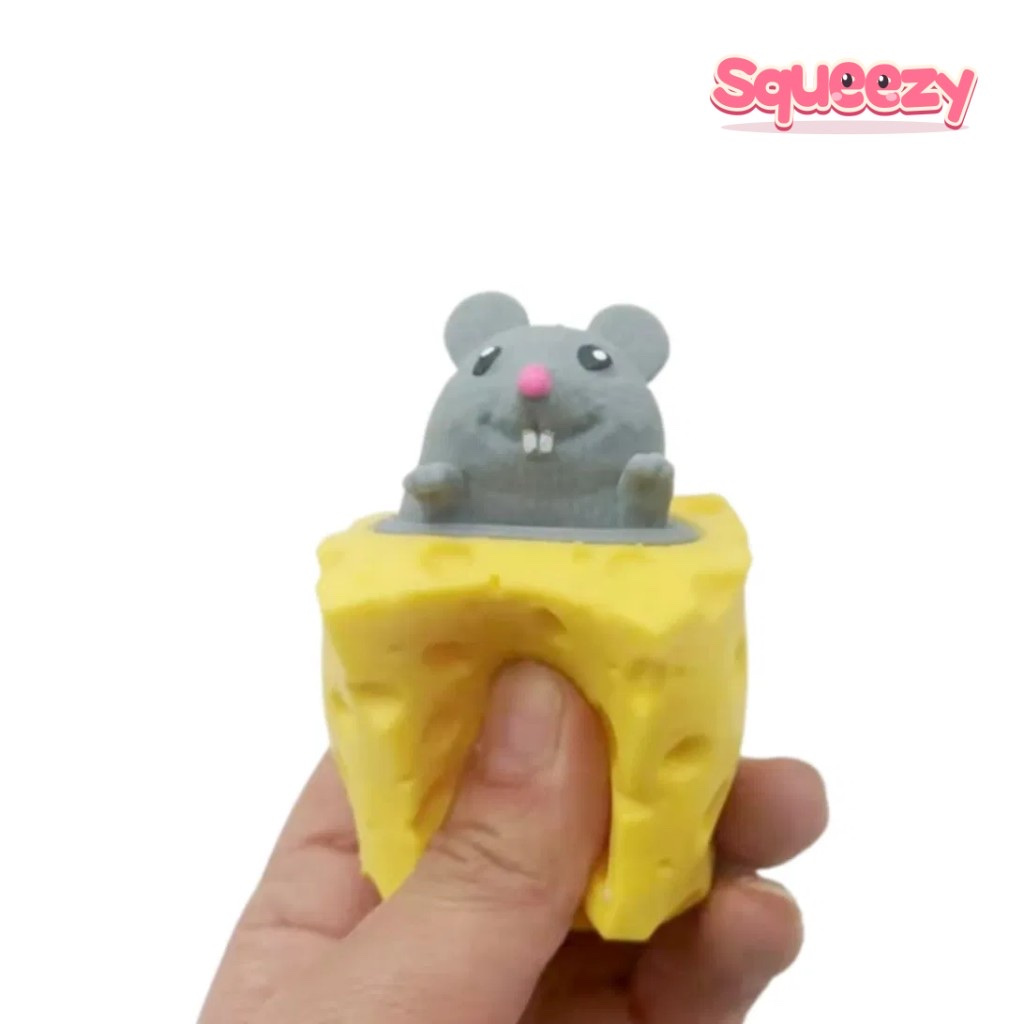
 Cheese Squishy
 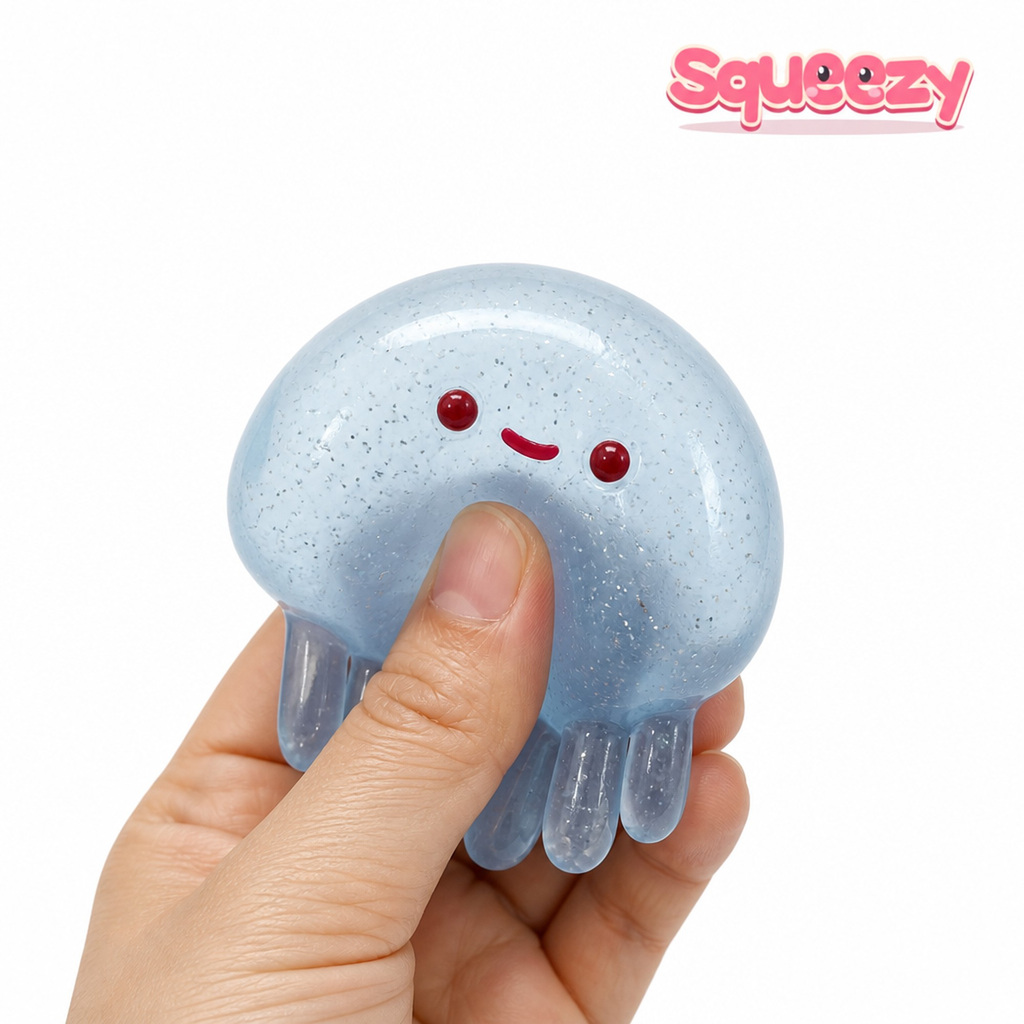 Jellyfish Squishy
 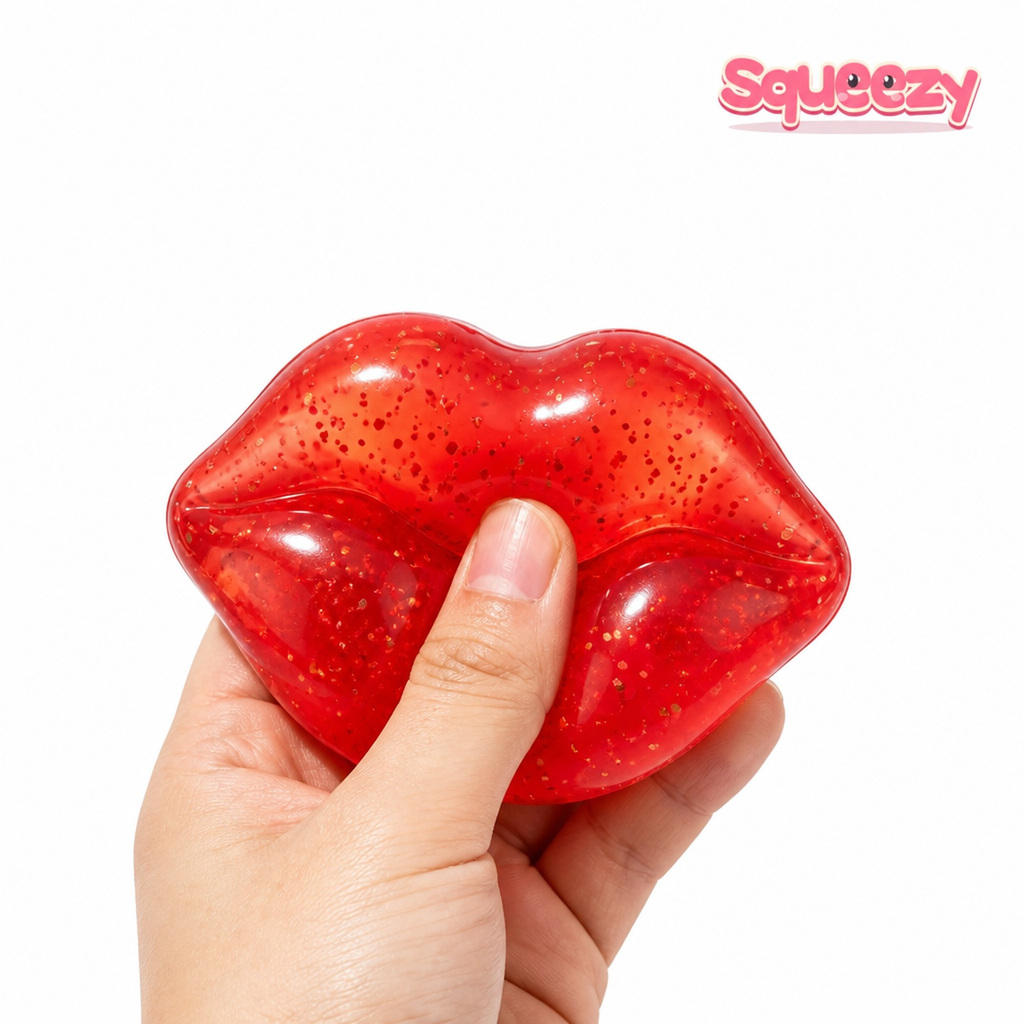 Jumbo Lips Squishy
 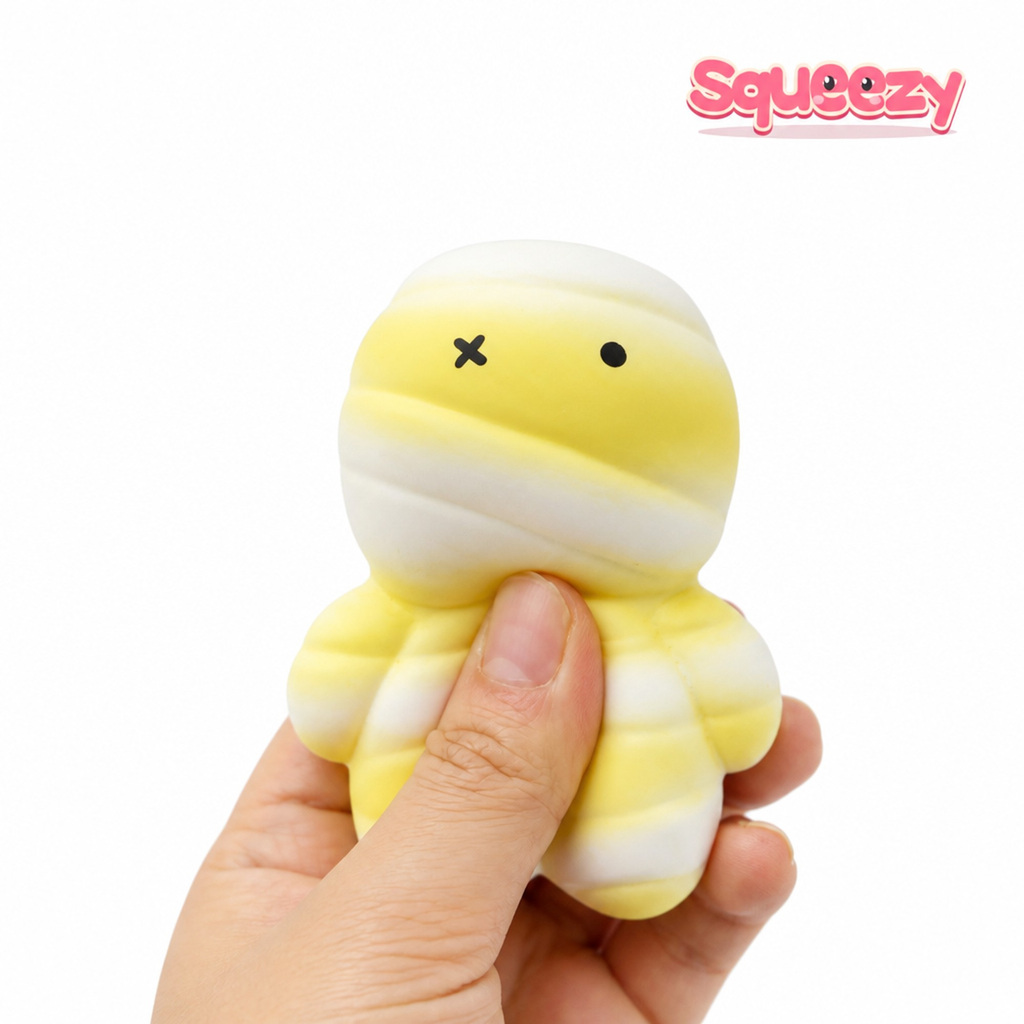 Mummy Squishy
 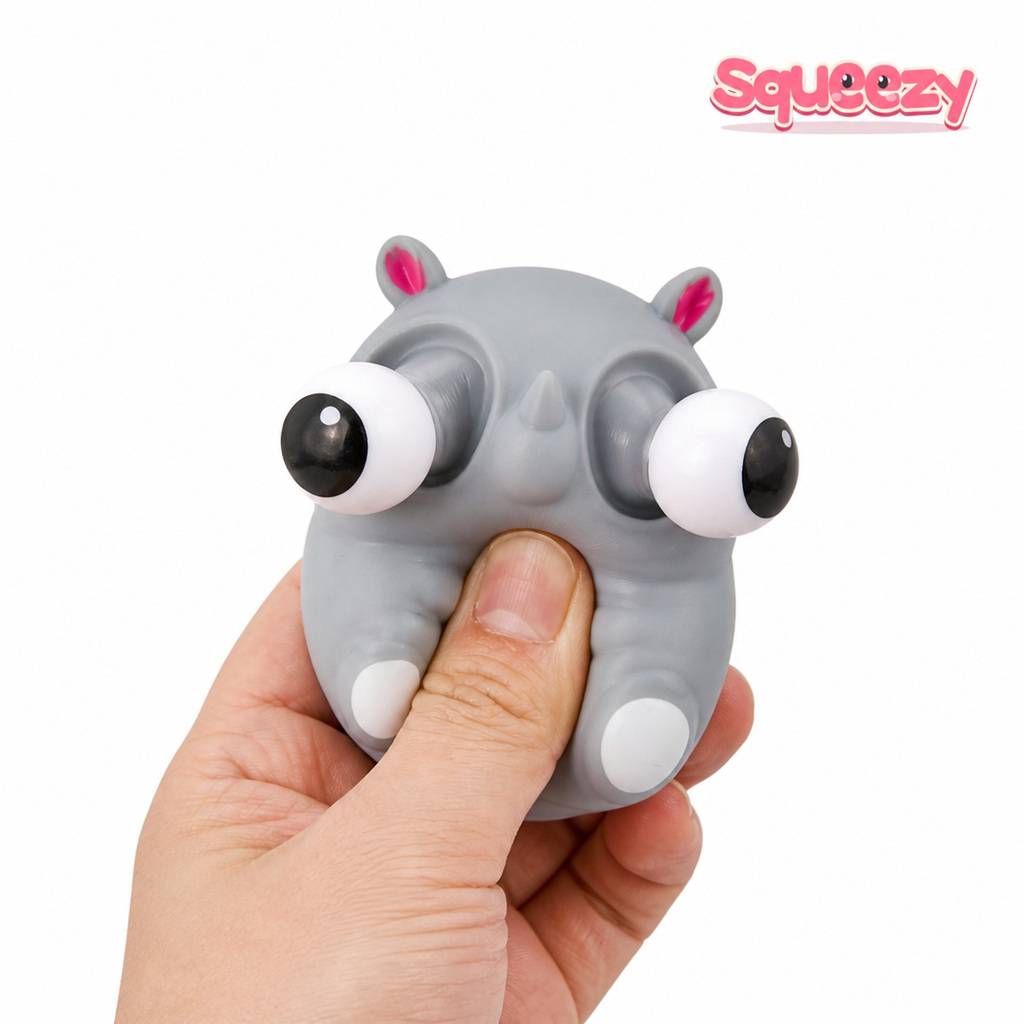 Pop-Eye Rhino
 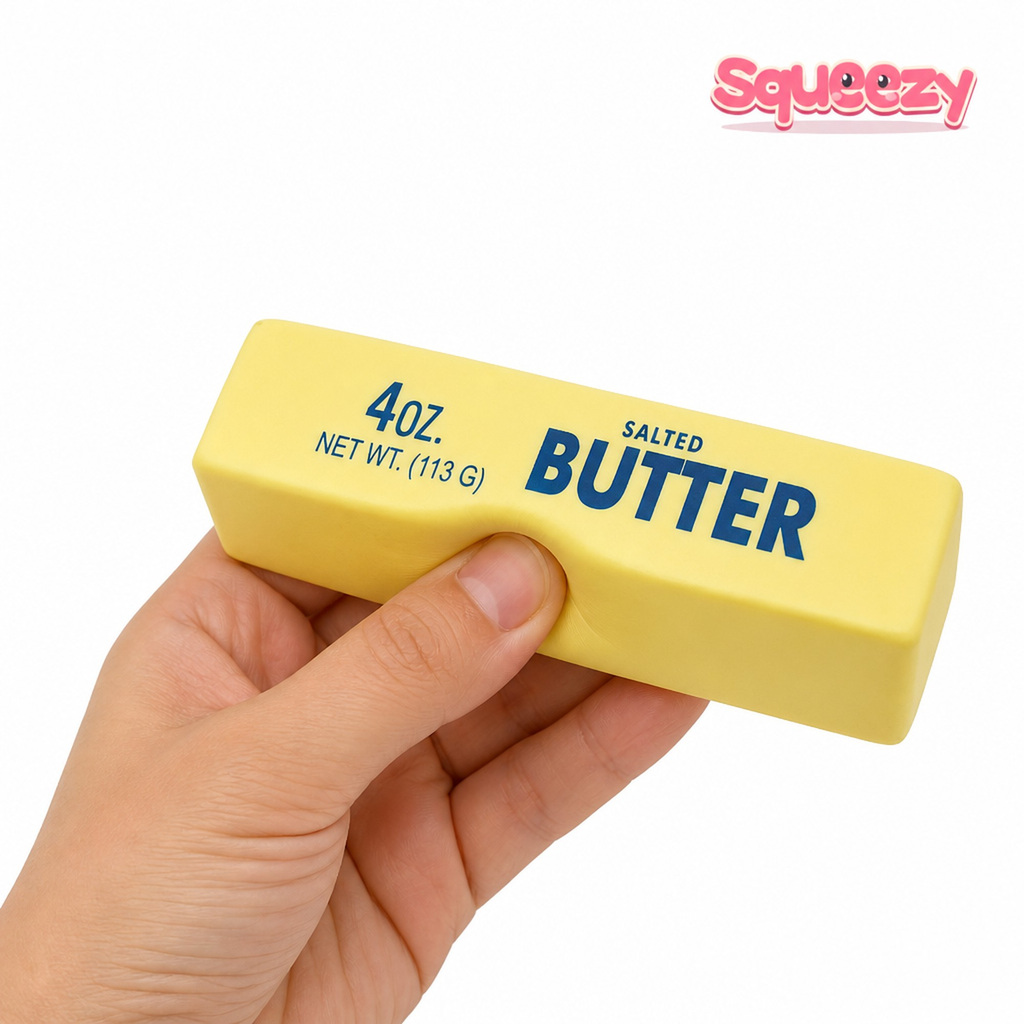 Salted Butter Stick
 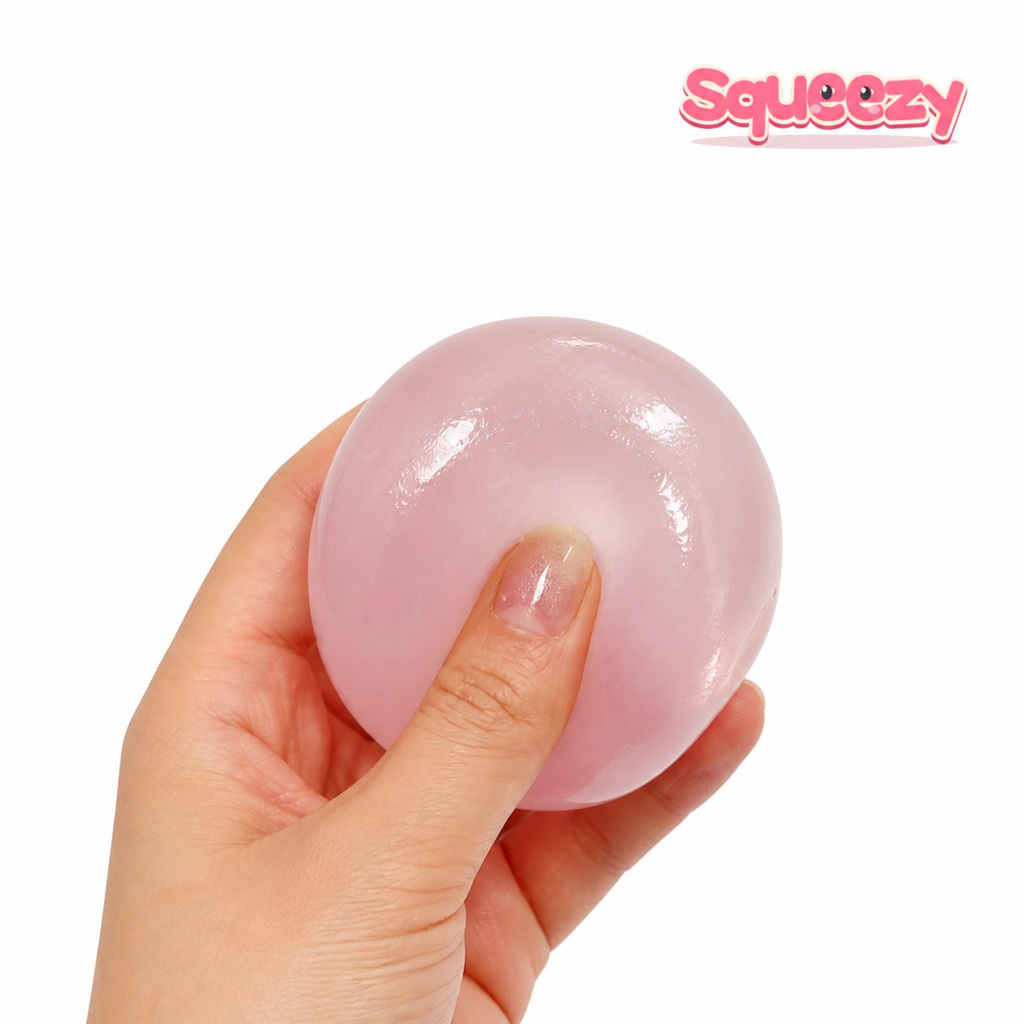 Pink Lychee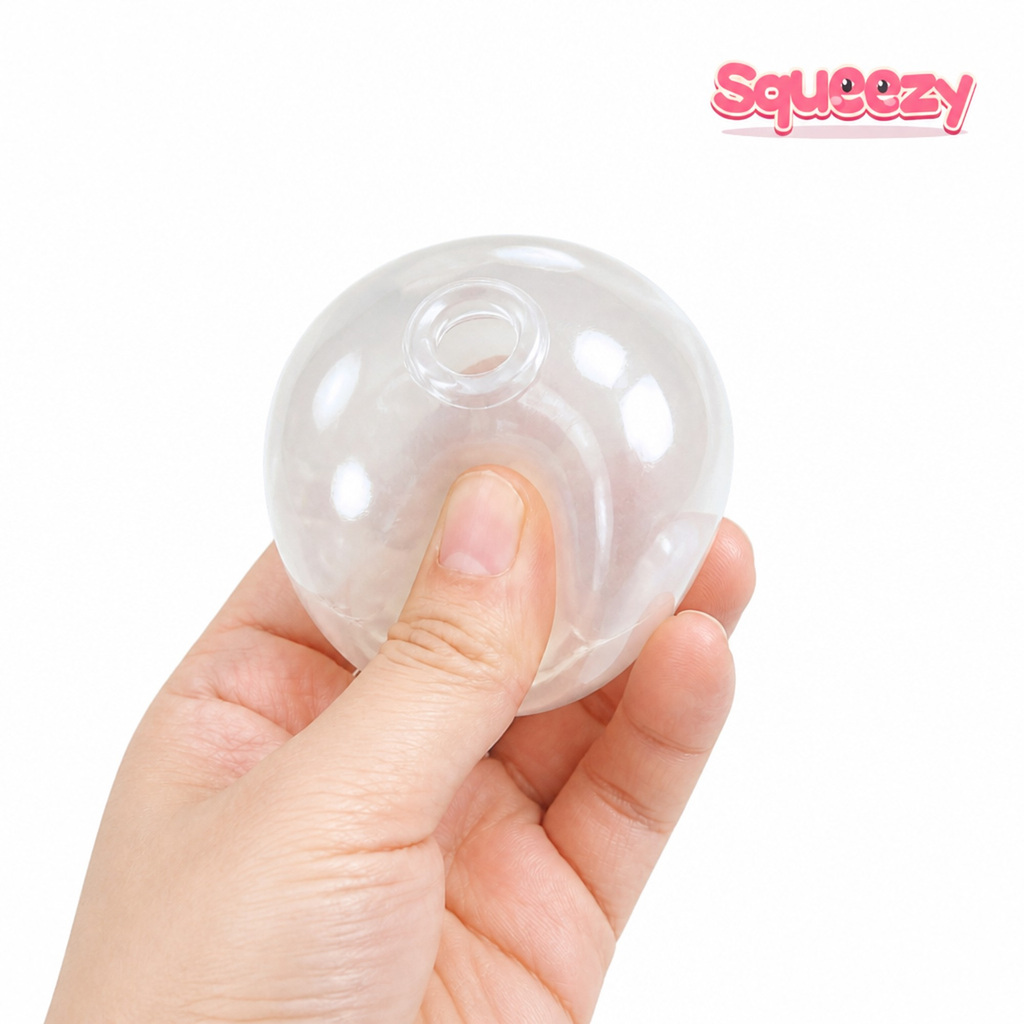
Cutting one open is a one-way test
What’s inside a stress ball or squishy is almost always one of five things: foam, a gel or fluid, sand, beads, or a dough-like fill held in a stretchy skin. Cutting squishies open will show you which, but it is the only test you cannot undo. Most of the time the listing, the see-through parts of the toy and a few squeezes will answer the same question with the toy still in one piece.
The videos of people slicing squishies are popular for a reason: the inside is hidden and the reveal is satisfying. What those clips skip is the part after the camera stops. Here is what each kind of fill does once the skin or surface is broken, based on how the materials themselves behave:
| If the toy is mostly… | What you would see after a cut | Can it go back together? |
|---|---|---|
| Slow-rise foam | The same soft foam all the way through, full of tiny cells | The cut stays open; foam does not reseal itself |
| Gel or fluid in a skin | Filling that oozes or runs out of the gap | Not really; the fill keeps finding the hole |
| Sand in a skin | Loose grains pouring out | Only by refilling a new skin |
| Beads in a clear shell | Loose beads rolling across the table | Only by refilling a new shell |
| Dough or putty in a skin | A soft lump that sticks to fingers and surfaces | Not in its old shape |
Only the foam kind survives a cut as something you can still squeeze, and even then the cut shows every time you press it. A torn skin is also hard to glue: which glue works depends on whether the skin is TPR, silicone or foam, and for some of them no glue holds well. We went through that in which glue fixes a ripped squishy.
If the reason for cutting is curiosity, keep the loose fill away from small children and pets while you clean up. Beads and grains are small pieces, and gel gets into carpet.
What’s inside a stress ball, according to the label
Before reaching for scissors, read what the seller wrote. On 30 September 2026 we went through the text of 960 of our active squishy and squeeze-toy listings (spinners, clickers and other hard fidgets left out) and looked for two things: a “Material” or “Material/Fill” line in the product details, and any fill word anywhere on the page.
- 362 of the 960 listings have a Material line.
- 219 of those 362 lines name an actual material: foam, PU foam, TPR, silicone, gel, maltose, sand, beads and so on.
- 143 of those lines say something that sounds like an answer but isn’t, such as “soft, squeezable squishy” (19 listings) or “soft squishy material” (6).
- 391 of the 960 listings never use a fill or material word at all, in the name, the tagline or the description.
So on our own shelf, a little under a quarter of the listings (219 of 960) tell you in plain words what’s in the toy. That is not a reason to cut the rest open. It is a reason to ask the seller before you buy; a vague Material line is a fair thing to question.
When the name is not the fill
The name on a squishy often describes how it looks, not what it is made of. Coconut oil squishies are the clearest case in our catalogue. Eight active listings carry “coconut oil” in their name, and none of them says the toy contains coconut oil. Their Material lines read:
- “Clear moldable gel” on the Coconut Oil Squishy Ball ($17.99)
- “Soft, slow-rise foam” on two of them, including the Handmade Coconut Oil Squishy ($17.99)
- a generic “soft, non-sticky squishy”, “soft, shapeable squishy” or “soft, squeezable” on the other five
The name comes from the look: a pale, cloudy scoop like the oil in a jar. The same pattern shows up with “sugar” and “maltose”, which mostly describe a glossy or grainy look rather than an ingredient; we sorted those in what sugar and maltose mean on a squishy label.
Checks that don’t need scissors
Look through it. Many squishies show you their inside. The Strawberry Gel Tube ($12) is a clear red pouch with tiny strawberry charms floating in the gel. The Bead Fidget Ball ($12) is a clear ball packed with pill-shaped beads that crowd together when you squeeze, then settle. If you can see it, you already know it.
Weigh it in your hand. Sand is heavy for its size. Our Caramel Monkey Squishy ($17.99) listing opens with “heavy in the palm” and says it is filled with fine sand that shifts as you knead it. A foam squishy of the same size feels far lighter.
Squeeze and wait. Foam that has been pressed flat puffs back on its own, slowly or quickly. A fluid core behaves differently: the Fluid Potato Squishy ($17.99) lists “soft fluid gel core under a stretchy skin” and describes a slow, mud-like return with no snap. Sand and dough tend to stay where you pushed them. We explained why sand holds its shape in sand-filled stress balls.
Listen. Beads rustle or crunch when they rub together; foam and gel are quiet.
Find the seam or plug. Skin-type stress balls are filled through a small opening that is then closed. The Clear Ball Skin ($12), sold empty, shows what that looks like: a hollow, milky-clear TPR shell with one small hole at the top. A squishy with no seam or plug anywhere is more likely to be solid foam or solid silicone.
None of these checks is proof on its own. Together with the Material line, they usually narrow it to one answer.
If you want to see a fill up close
The honest way to see the inside is to start from an empty skin rather than to cut a finished toy. A clear skin lets you watch what the fill does as you squeeze it, and nothing is lost if you change your mind. If the toy you have is foam and you mainly want to know why it ages or cracks, that story is in what PU foam is and why it cracks. For slime and gel fills, see slime squishies and slime stress balls.
FAQ
What’s inside a stress ball that looks white?
It depends on the build, and a colour alone doesn’t settle it. Some clear squishies turn white when you squeeze them; our clear coconut oil squishy listing, for example, says the body clouds white under pressure and then drifts back to clear, which is the body changing, not a second filling. For a toy you have not bought yet, ask the seller what the fill is.
What is inside a squishy that rises slowly?
In most slow-rising squishies it is foam, often named as PU (polyurethane) foam. Our Jumbo Banana Squishy ($17.99, 7 inches), for instance, lists “Soft PU foam” as its Material/Fill. Some gel and fluid squishies also return slowly, so check the Material line rather than going by speed alone.
Is cutting squishies open dangerous?
The main risks are ordinary ones: the knife, and the mess afterwards. Beads, sand and gel make small, slippery pieces that shouldn’t be left where a small child or a pet can get at them. We don’t recommend cutting open a toy you want to keep, because none of the filled kinds goes back together.
Can I refill a squishy after cutting it open?
Not the original skin, in practice. Once the skin is split the fill will keep escaping through the cut. If you enjoy the filling part, an empty clear skin is a better start than a cut one.