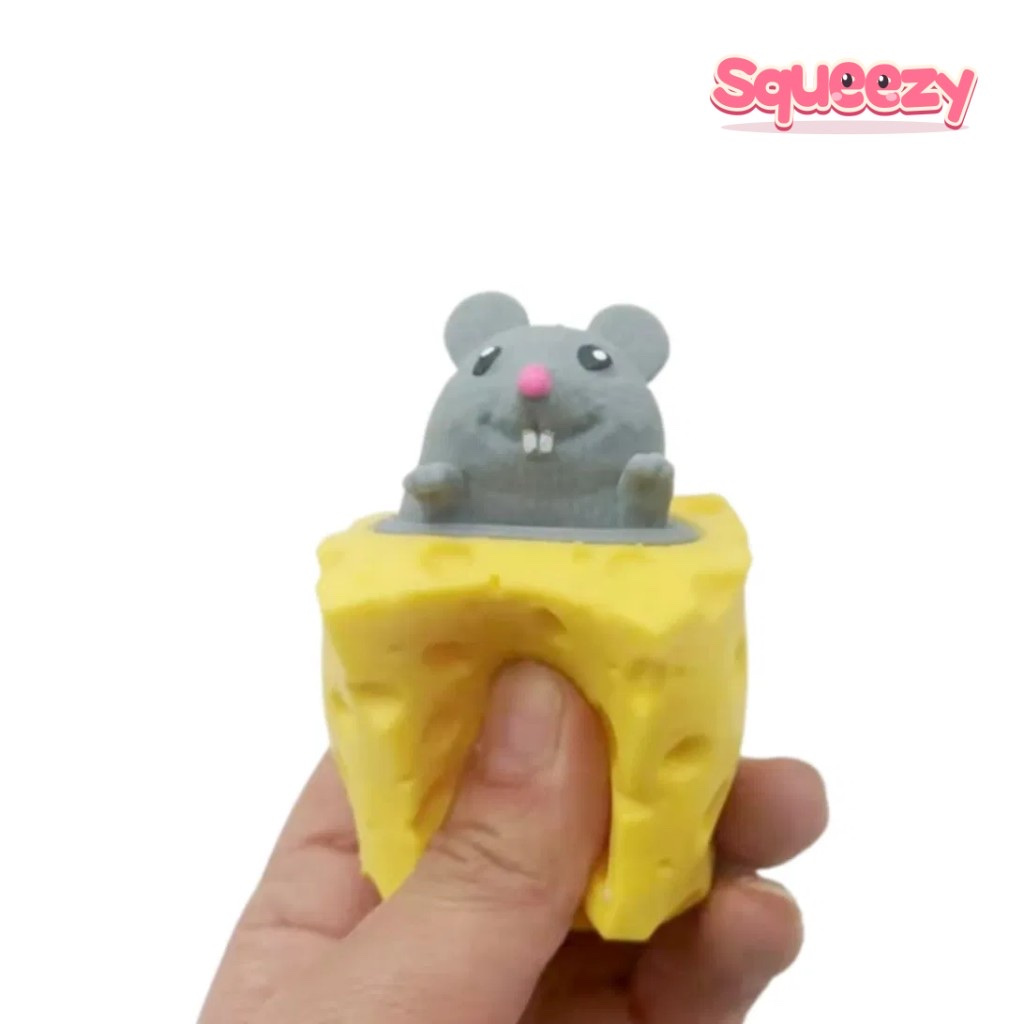
 Cheese Squishy
  Jellyfish Squishy
  Jumbo Lips Squishy
  Mummy Squishy
  Pop-Eye Rhino
 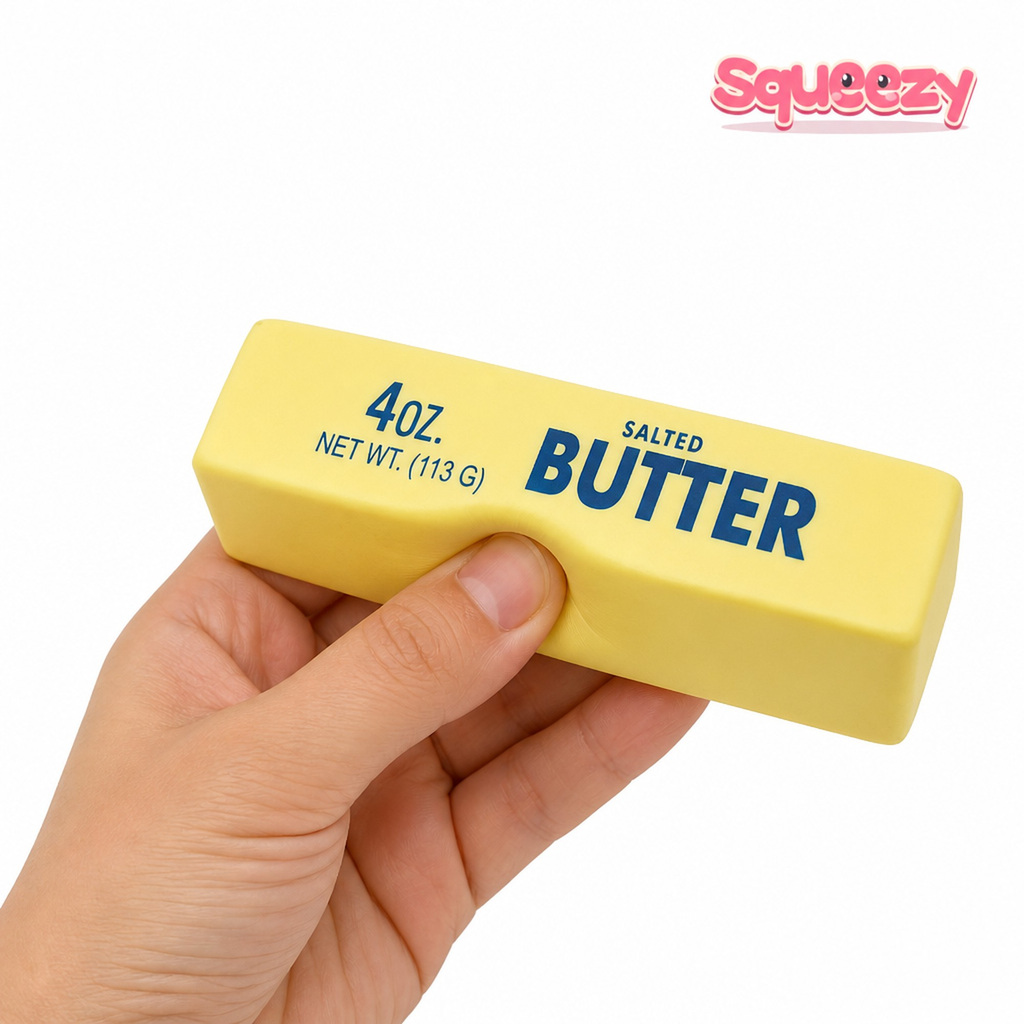 Salted Butter Stick
 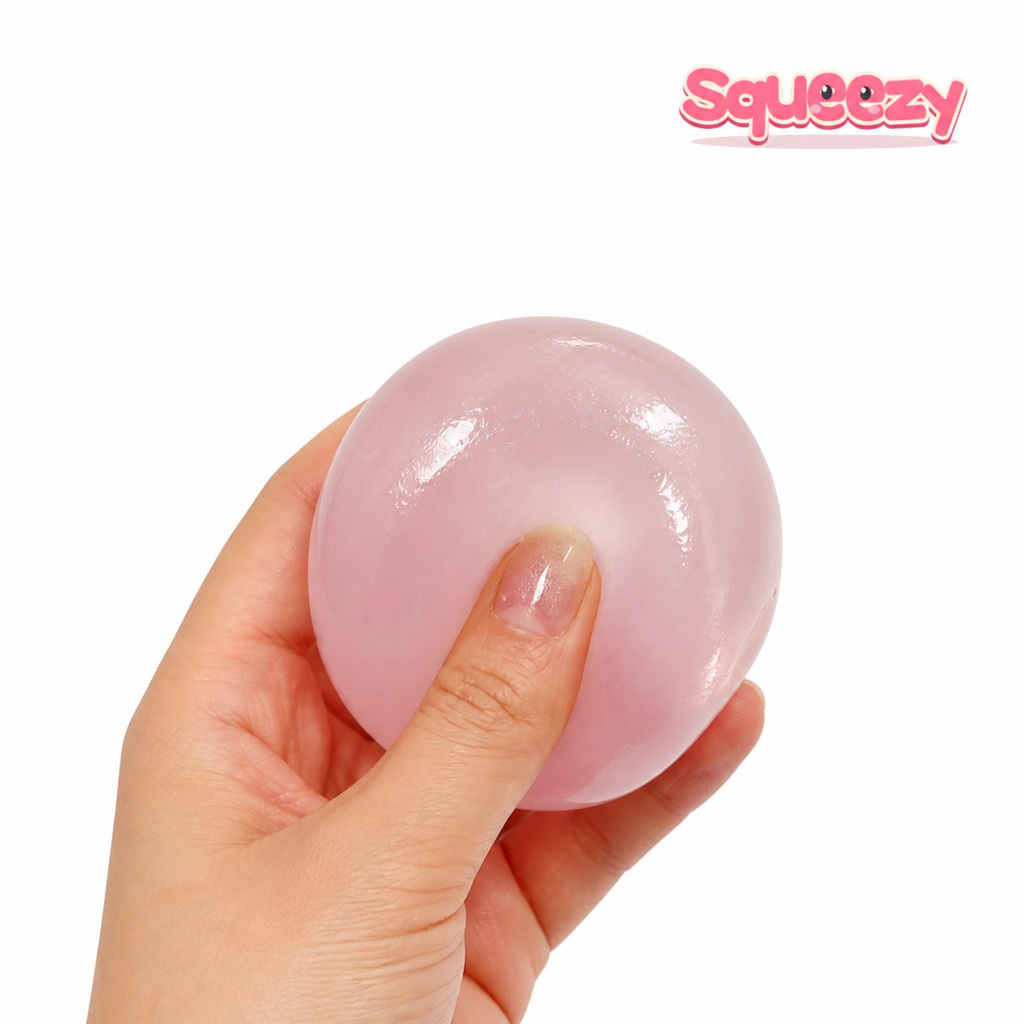 Pink Lychee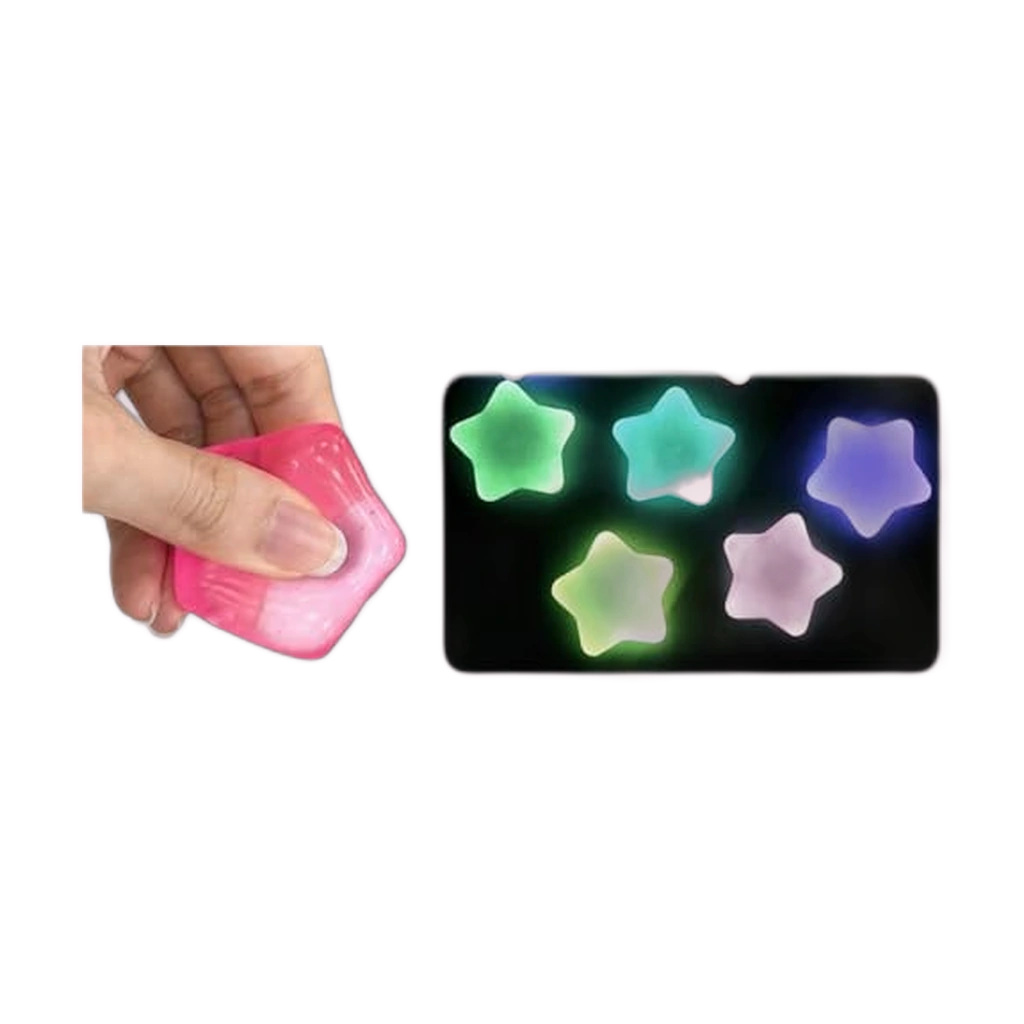
Glow in the dark squishies hold a pigment that soaks up light and gives it back slowly, so they need charging before they glow. A few minutes under daylight or a bright white light is enough; the glow is strongest right after the light goes off and fades over minutes to hours. Some squishies sold as “glow” toys are not like this at all: they are LED lamps with a USB cable.
Charge-glow or battery glow: check which one you have
On squeezy, we reviewed 19 listings with “glow” or “luminous” in the name. Read the descriptions and they split three ways:
| What the listing says | Listings | How it glows | Example |
|---|---|---|---|
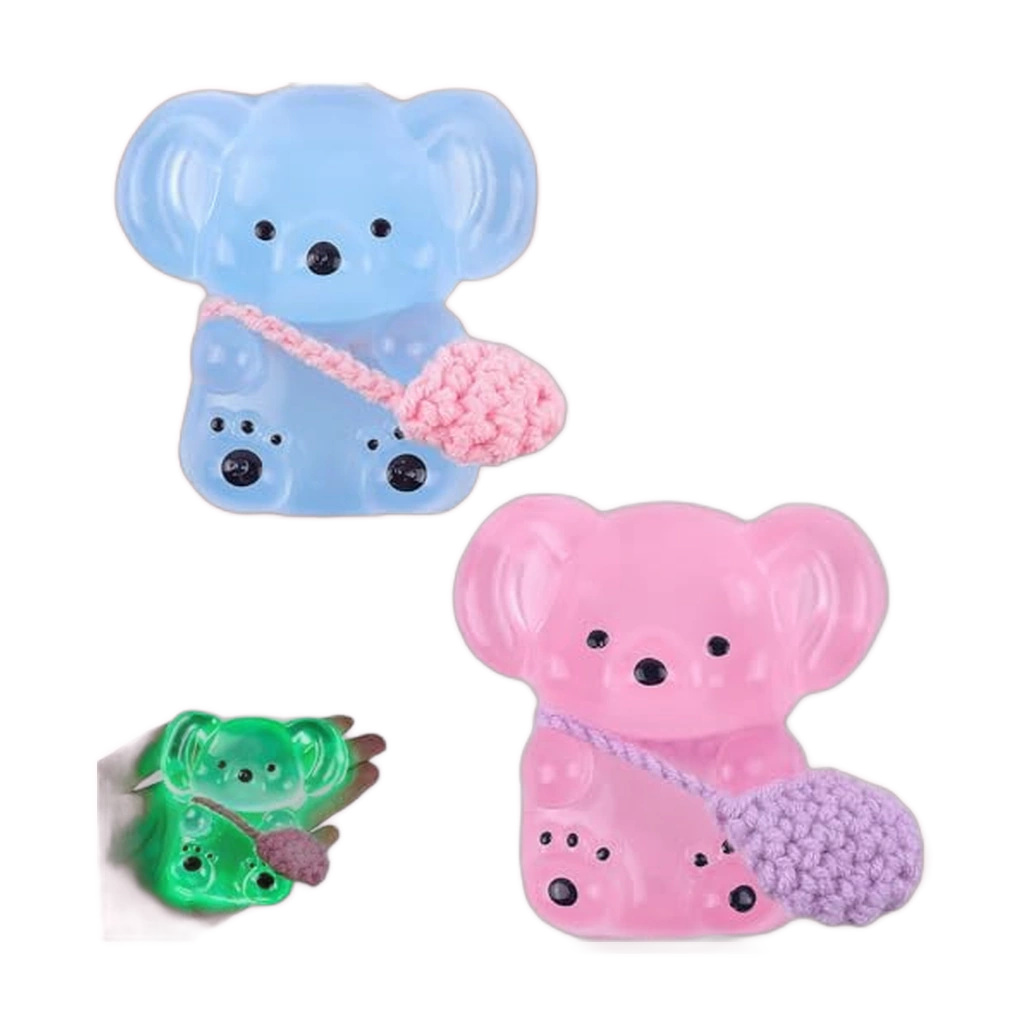
| Charge it in light, then it glows in the dark | 9 | pigment, no battery | Glow in the Dark Koala Squishy 2 Pack, 19.99 USD |
| USB charging, dimmable or press-to-light | 3 | LED and battery | Chunky Sloth Squishy Night Lamp, 17.99 USD |
| “Glow” in the name, no word on how | 7 | not stated | Glow Bao, 12 USD |
The two kinds behave differently. A charge-glow squishy only gives back light it has already taken in, never needs a cable, and dims on its own. An LED squishy lamp stays at whatever brightness you set until you switch it off or the battery runs down. The chunky sloth listing says it has a quick USB charge and a dimmable glow; the huggable sloth has three light levels. Neither is phosphorescent.
The third row is where people get surprised. The four “Glow Bao” dumplings describe a neon-green bun, a cream bun, a mint bun and a glitter-gel bun, and none of the four descriptions says it glows in the dark. The Glow Skeleton Keychain describes a poseable skeleton with a metal ring and says nothing about glowing either. When a name says “glow” and the description does not, read “glow” as a description of the look until someone confirms otherwise.
One name works the other way. The Glow in the Dark Dolphin Squishy Cube has “Light Up” in its title, which sounds like an LED, but its description says it glows green once charged under a lamp. It is a charge-glow toy.
How to charge glow in the dark squishies
Glow pigments do not respond equally to every kind of light. The common long-lasting pigment, europium-doped strontium aluminate, is charged by light from about 200 to 450 nm, which covers ultraviolet and violet-blue (Wikipedia, Strontium aluminate). That range explains a few everyday results:
- Daylight near a window charges well. Daylight carries plenty of blue and some ultraviolet.
- A white LED or a phone flashlight works. Most white LEDs are a blue LED under a phosphor coating, and some of that blue gets through (Wikipedia, Light-emitting diode). Hold the squishy close for a minute or two.
- A small UV flashlight sits right in the charging range, if you already own one.
- A warm yellow bedside bulb is the weakest option. It has little blue in it, so the squishy looks faint even after a long charge.
The listings on squeezy only say “charge it in light”, “under a lamp” or “under any light”. The ghost cube listing adds that the little figure glows after a few minutes near a lamp. No listing names the pigment, so you cannot tell from the page whether you are getting strontium aluminate or an older zinc sulfide pigment.
You do not need to leave a glow squishy in strong sun for hours. The listings talk about minutes near a lamp, and long spells in direct sun add heat and UV that a soft toy does not need.
How long a glow in the dark stress ball keeps glowing
Phosphorescent toys glow brightest in the first moments after the light goes off and then fade, sometimes within a few minutes and sometimes over a few hours (Wikipedia, Phosphorescence). Where one toy lands in that range depends on three things:
- Which pigment it holds. Strontium aluminate is described as roughly ten times brighter and ten times longer glowing than copper-activated zinc sulfide, the pigment in older glow-in-the-dark stars. That comparison carries a citation-needed tag on Wikipedia, so treat it as a rough guide.
- How much pigment sits where you can see it. On the Glow in the Dark Ghost Squishy Cube (17.99 USD), the listing says the ghost figure inside glows, not the whole cube. On the 24 Pack Glow in the Dark Star Squishy Stress Balls (49.99 USD), the listing describes the stars themselves giving off a soft green shine.
- Temperature. Warmer phosphors release their stored light faster, so they glow brighter for a shorter time; cooler ones glow dimmer for longer. So a squishy warmed in your hand should fade a little sooner than one sitting on a cool shelf.
None of the 19 listings gives a glow time in minutes or hours. That is the honest state of the information: the time depends on the pigment and the charge, and the page does not state either.
Why a glow squishy stops glowing as well as it used to
Before deciding a squishy has faded for good, rule out the simple causes:
- The light changed. A toy that glowed well after sitting by a window may look dead after an evening under a warm lamp.
- Your eyes had no time to adjust. Walking from a bright room into a dark one, you miss most of a faint glow for the first minute.
- The window got cloudy. On a clear gel cube with a glowing figure inside, a scuffed or hazy outer body blocks part of the light.
- It was soaked. Makers often coat strontium aluminate particles to protect them from water damage over time, per the same Wikipedia entry. You cannot tell whether a toy’s pigment is coated, so a wipe is safer than a long soak.
Testing the glow before you give a glow in the dark squishy ball as a gift
If the glow is the point of the gift, test it the way the recipient will use it:
- Charge the squishy for two minutes under a phone flashlight held a few centimetres away.
- Take it into a dark room, wait one minute for your eyes, and look.
- Check again at ten minutes and at thirty. Write down whether you can still find it on a dark desk.
- If you want a photo, use a tripod or lean the phone on something. Night mode can brighten the picture well past what an eye sees, so say that in the message if you send it.
For party packs, test one or two pieces from the pack rather than all of them. The Glow Gel Ball Squishy 4 Pack (29.99 USD) and the Glow in the Dark Marshmallow Squishy Ice Cube (17.99 USD) both describe charging under a lamp, so the same test applies.
Glow in the dark fidget toy or squishy: which one fits
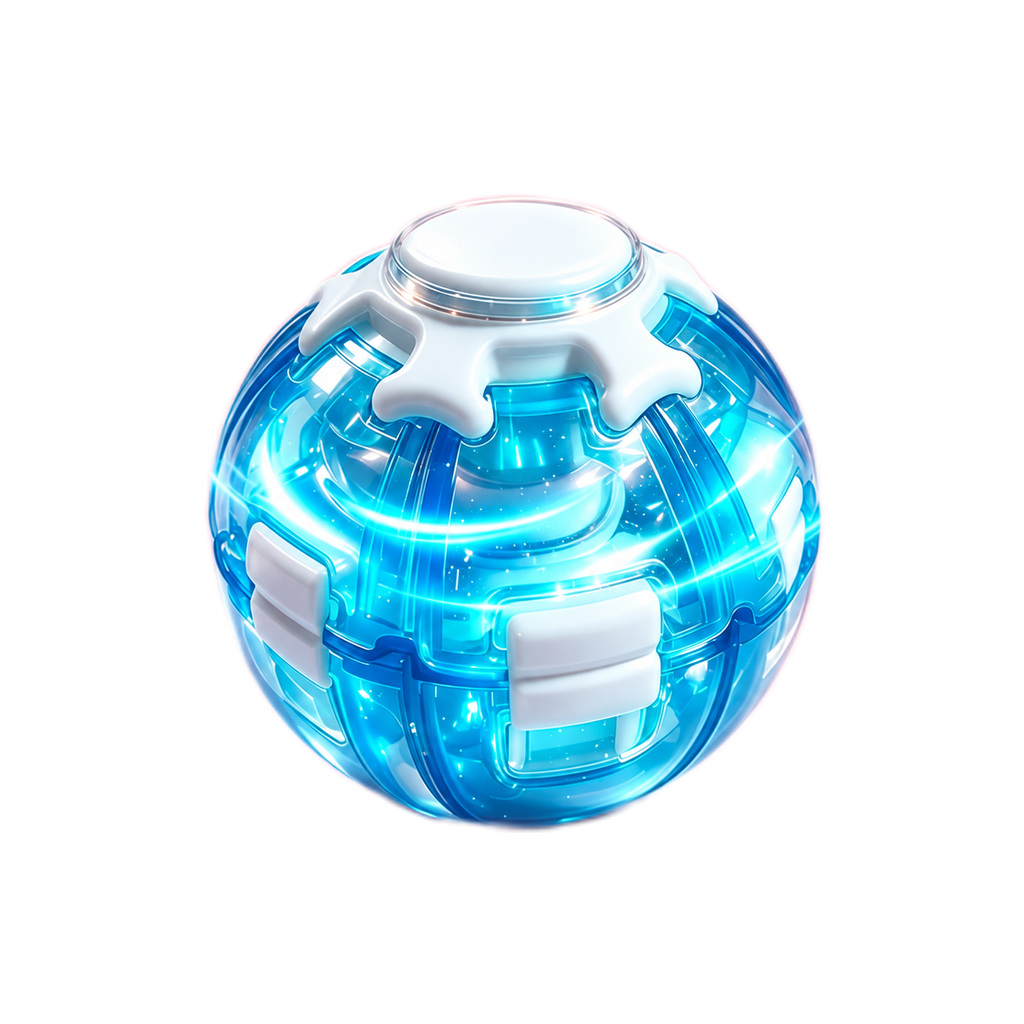
The glowing listings on squeezy are mostly squeeze toys. Two glow-named listings sit in the Fidget Toys collection: the skeleton keychain above, and the Blue Glow Press & Spin Ball, which says “Press, spin, and glow” and describes a translucent blue ball, without saying whether the glow comes from pigment or a light. If you want a glow in the dark fidget toy that you click or spin rather than squeeze, ask before ordering how these glow. For the squishies, the charge-glow group is the one to pick for a dark bedroom shelf, and the LED sloth lamps are the ones to pick if you want light you can turn on and off.
FAQ
Do glow in the dark squishies need batteries?
The charge-glow kind does not. It stores light from a lamp or daylight and gives it back in the dark. The sloth squishy lamps on squeezy are different: they are LED lights, and the chunky sloth listing mentions USB charging.
How long do glow in the dark squishies glow?
Anywhere from a few minutes to a few hours, brightest at the start. The pigment, how much of it is visible and the room temperature all change the time, and none of the squeezy listings gives a figure.
Can I charge a glow in the dark squishy with my phone flashlight?
Yes. A phone flashlight is a white LED, and white LEDs give off blue light that the pigment can use. Hold it close for a minute or two. A UV flashlight also works well; a warm yellow bulb is slow.
Is a glow in the dark stress ball the same as a light-up one?
Not always. “Glow in the dark” usually means a charged pigment. “Light up” can mean an LED, but the dolphin cube on squeezy uses “Light Up” in its name and still charges under a lamp, so read the description rather than the title.