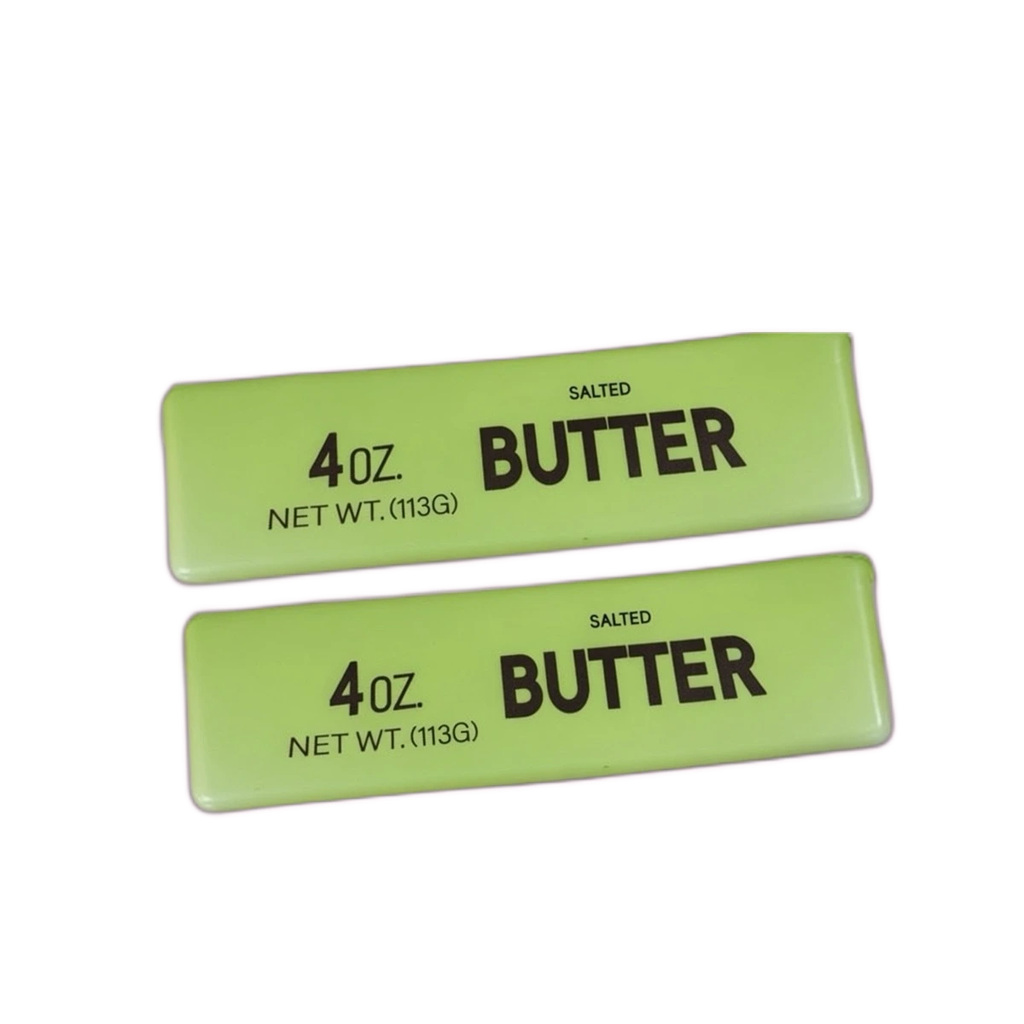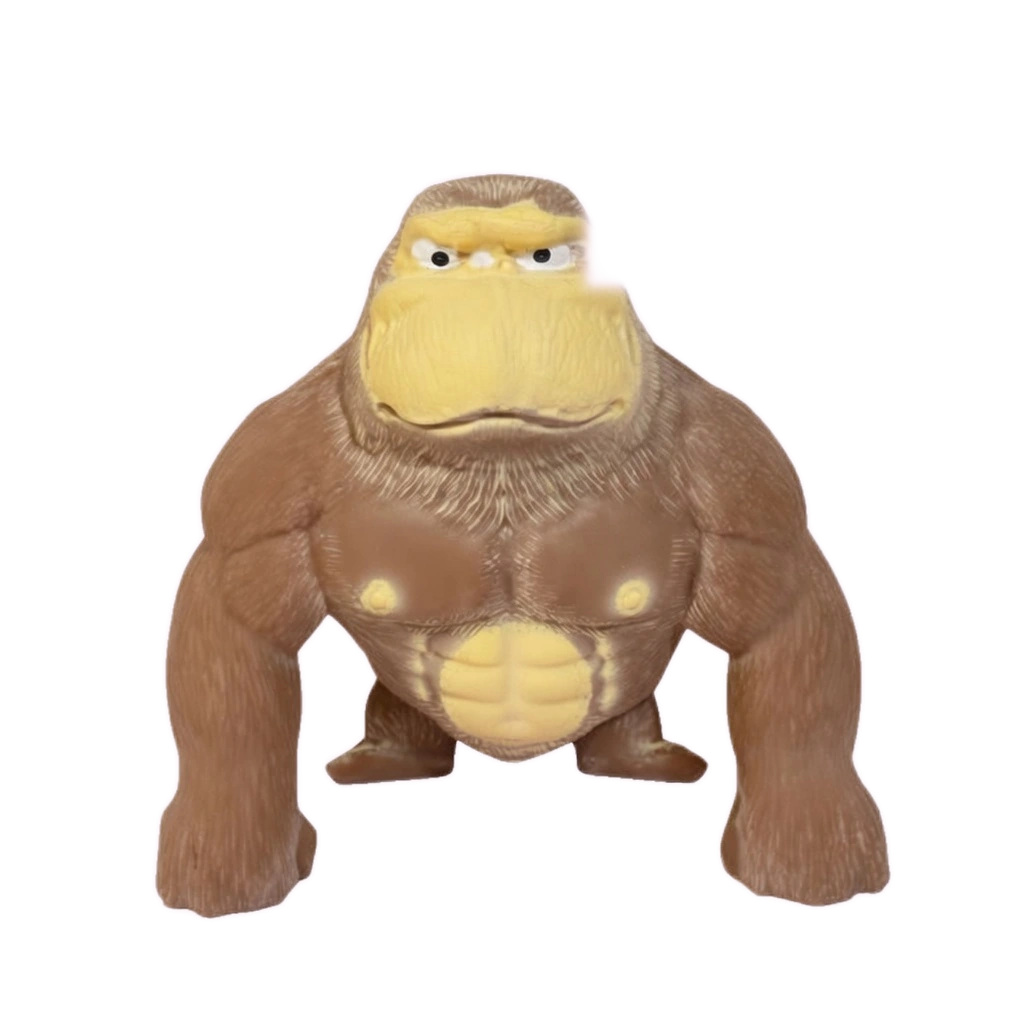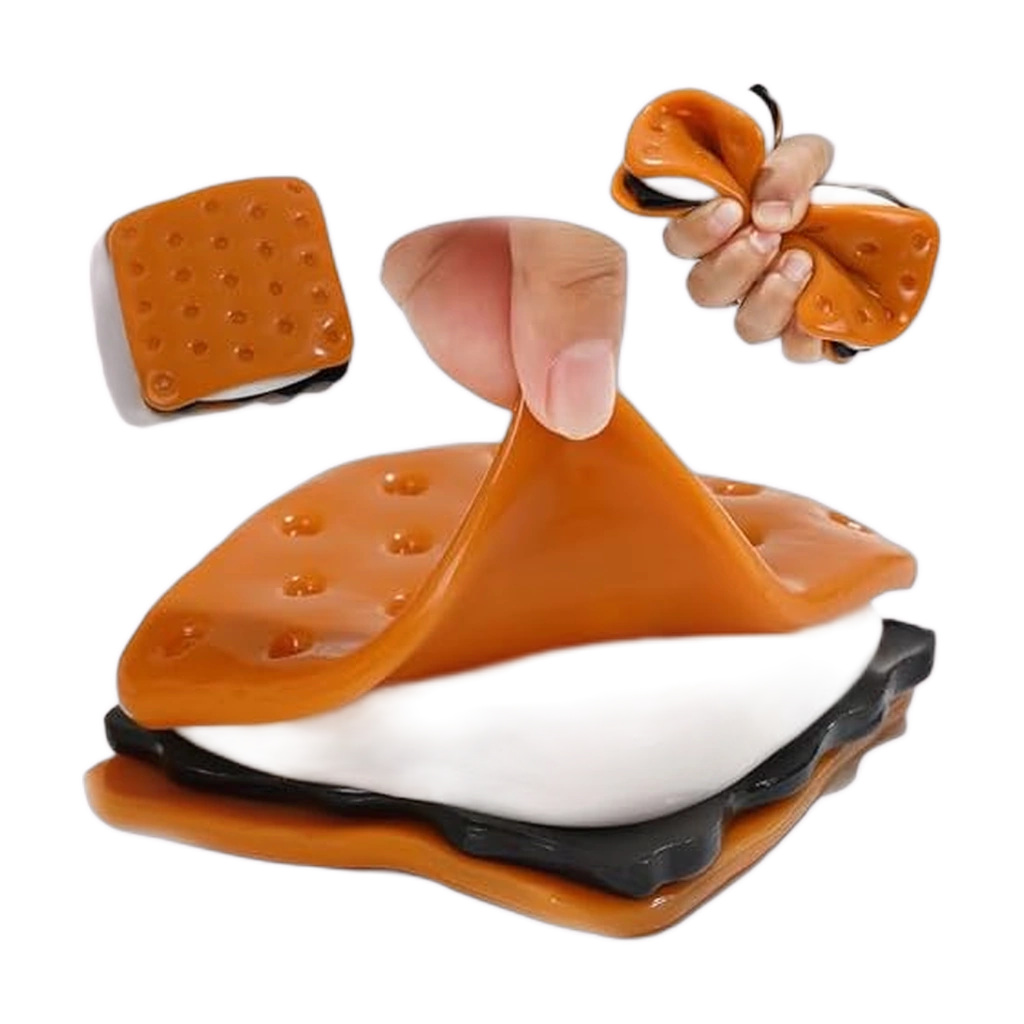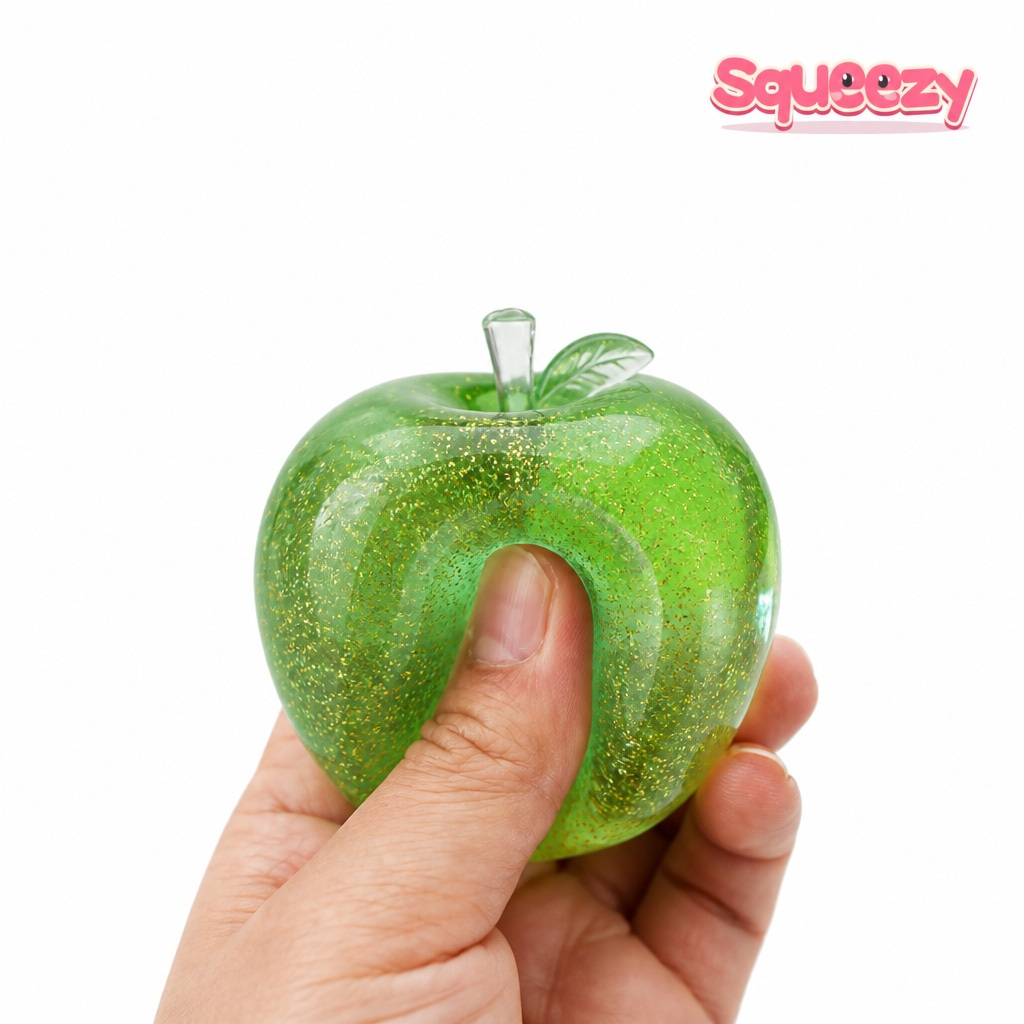
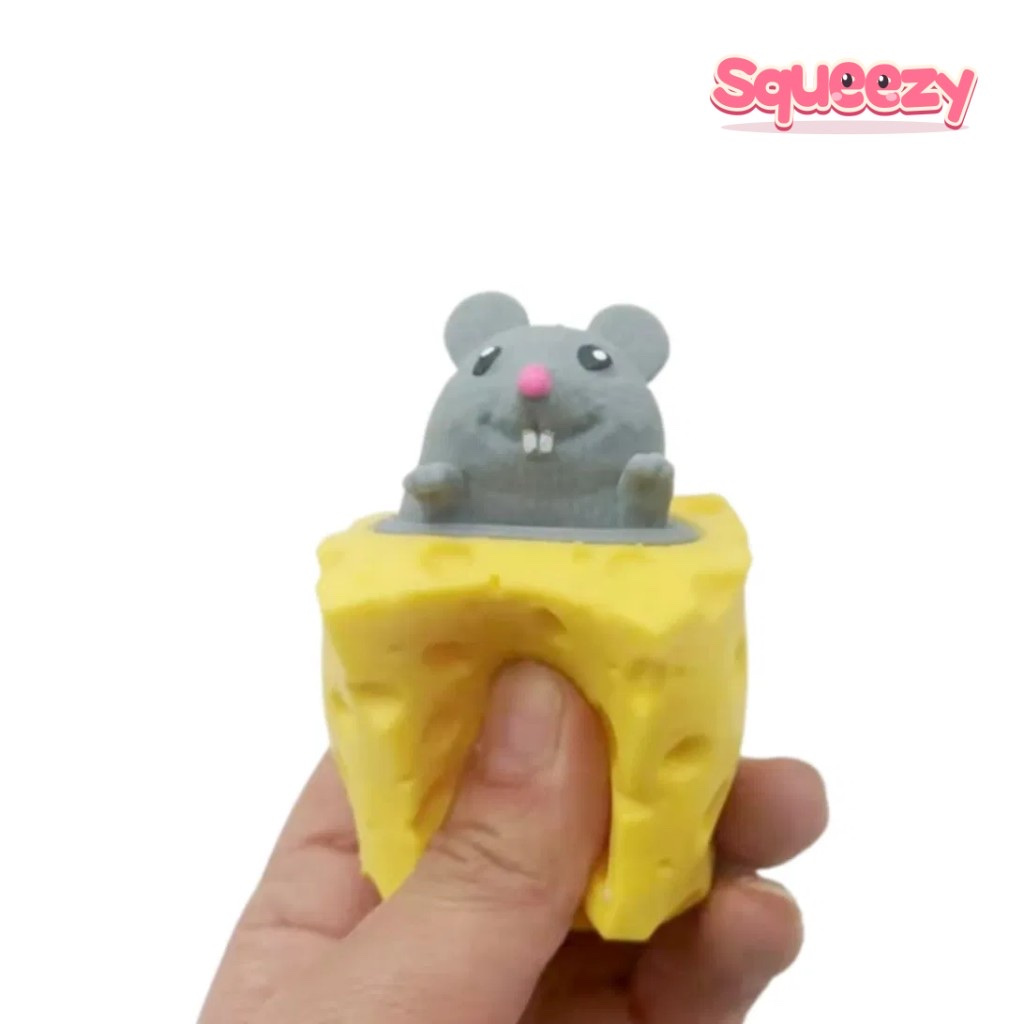
 Cheese Squishy
 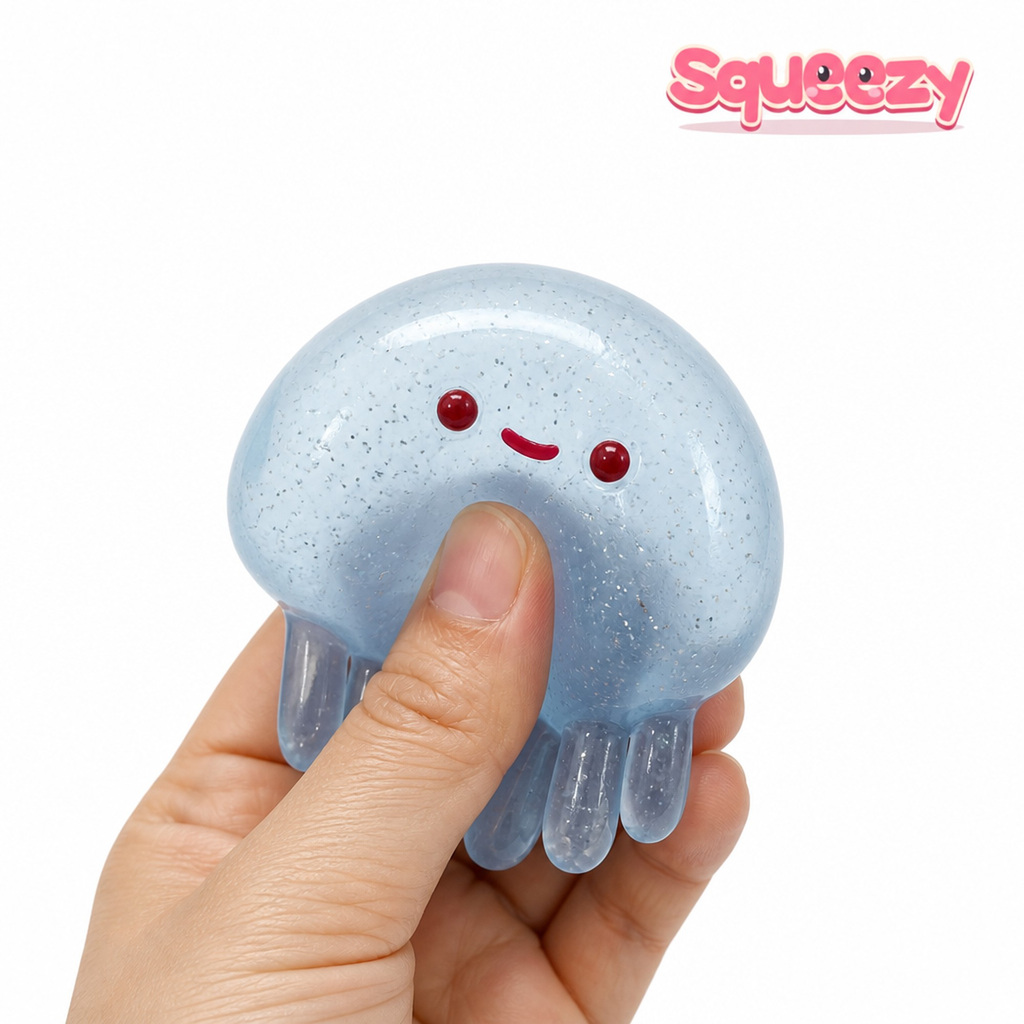 Jellyfish Squishy
 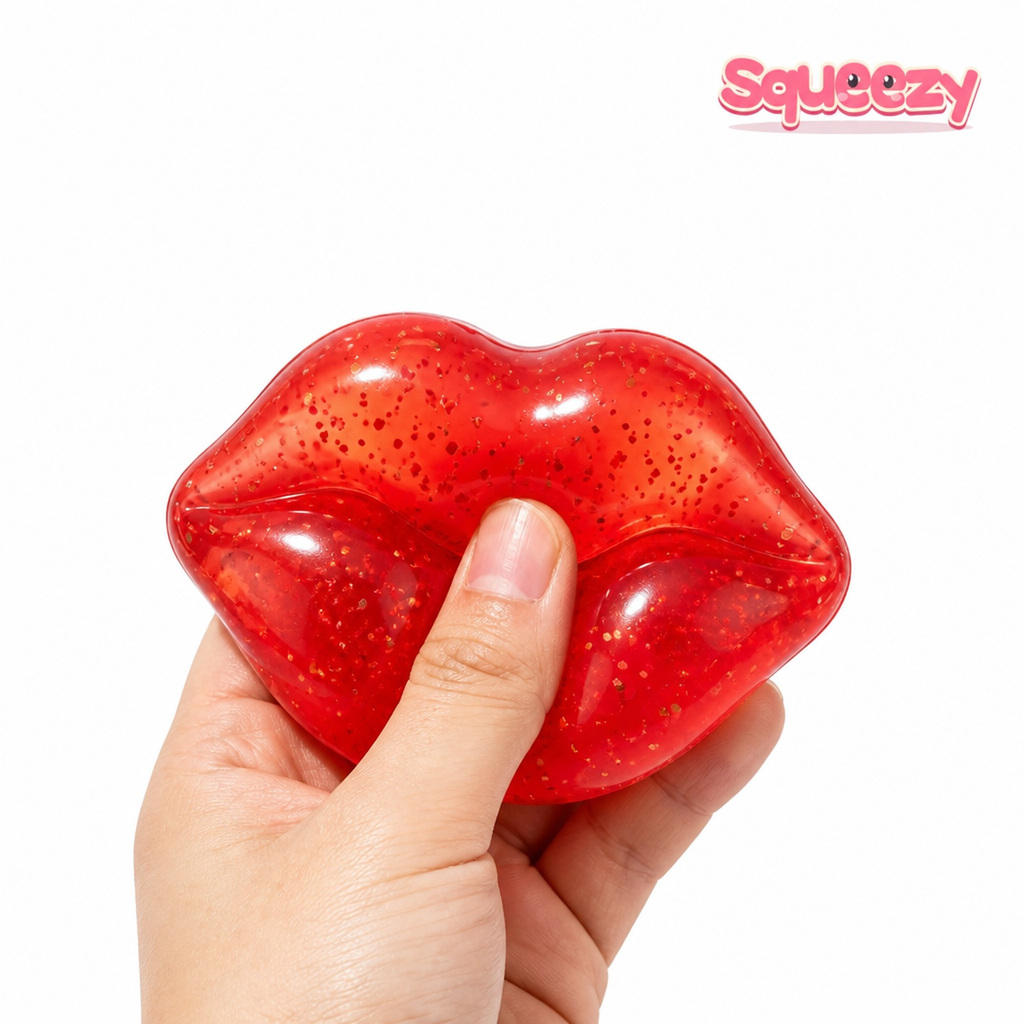 Jumbo Lips Squishy
 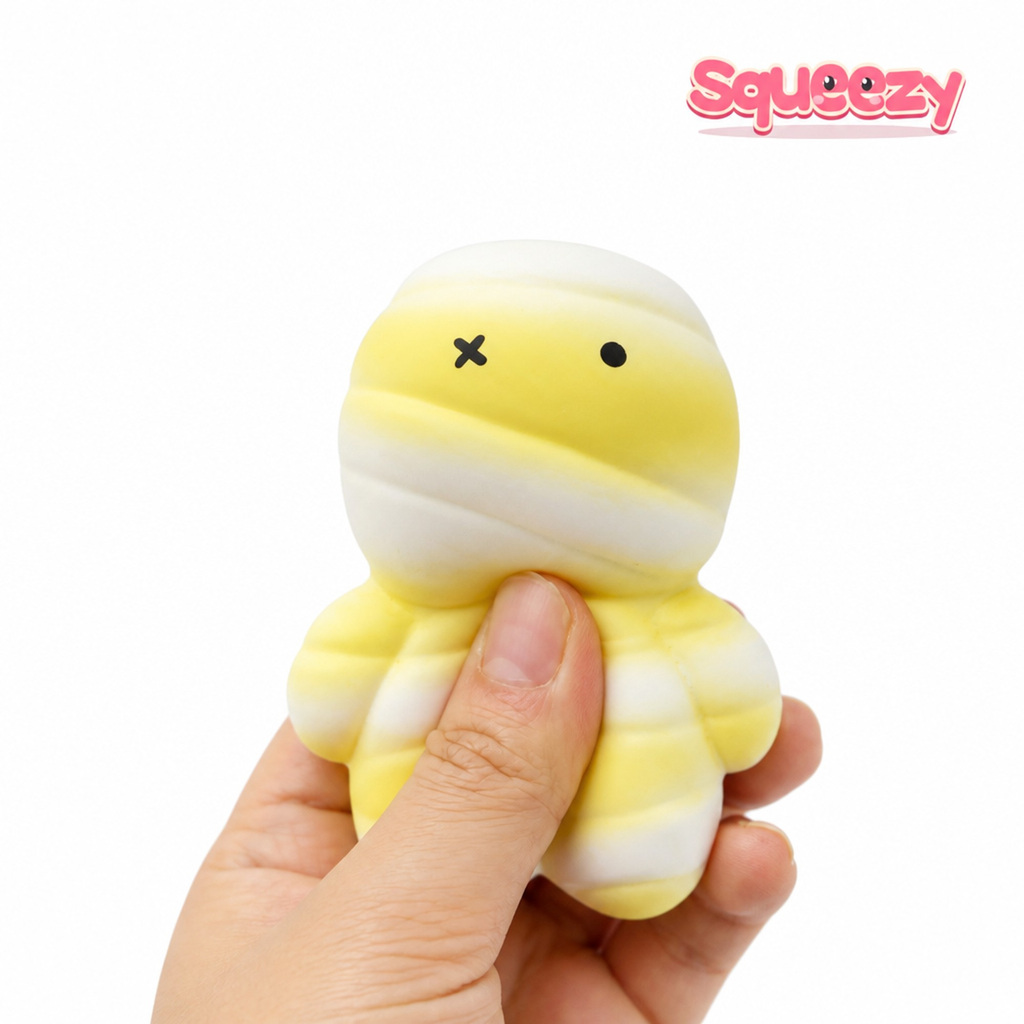 Mummy Squishy
 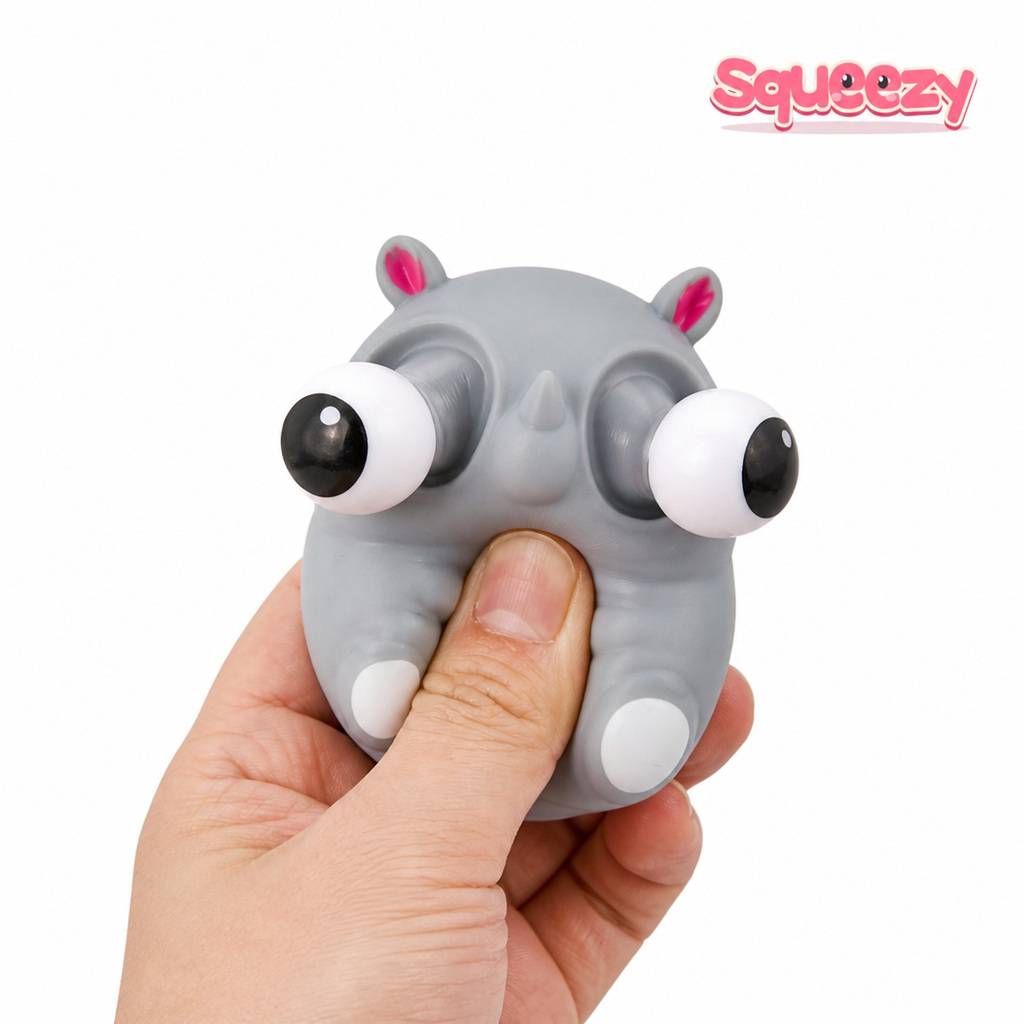 Pop-Eye Rhino
 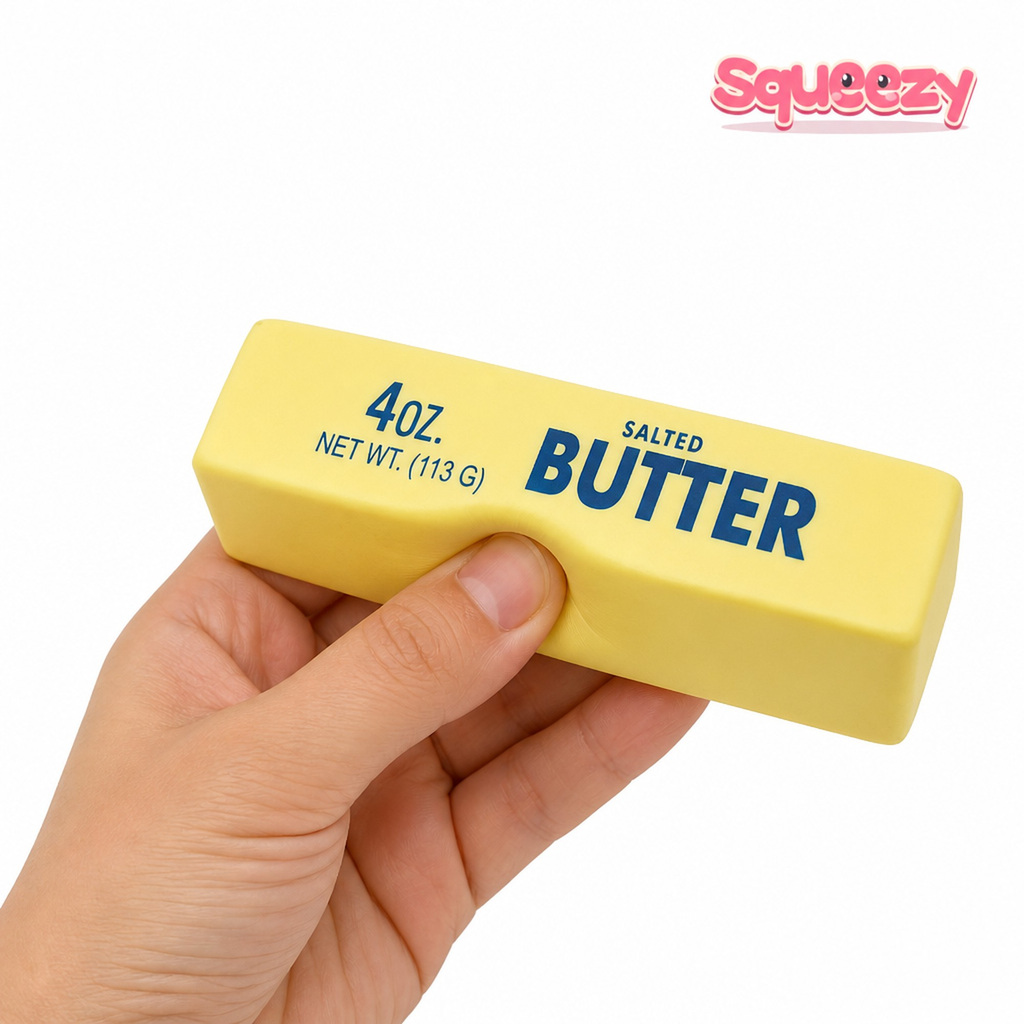 Salted Butter Stick
 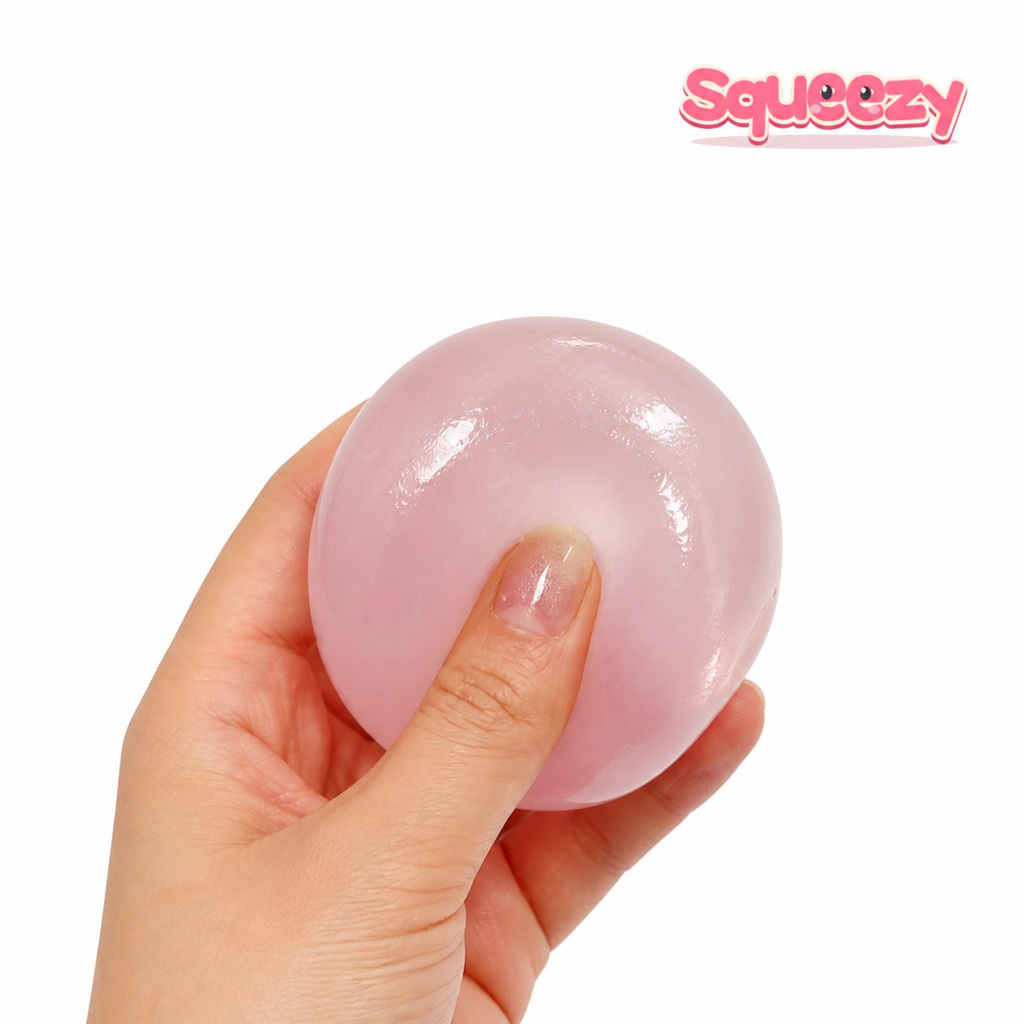 Pink Lychee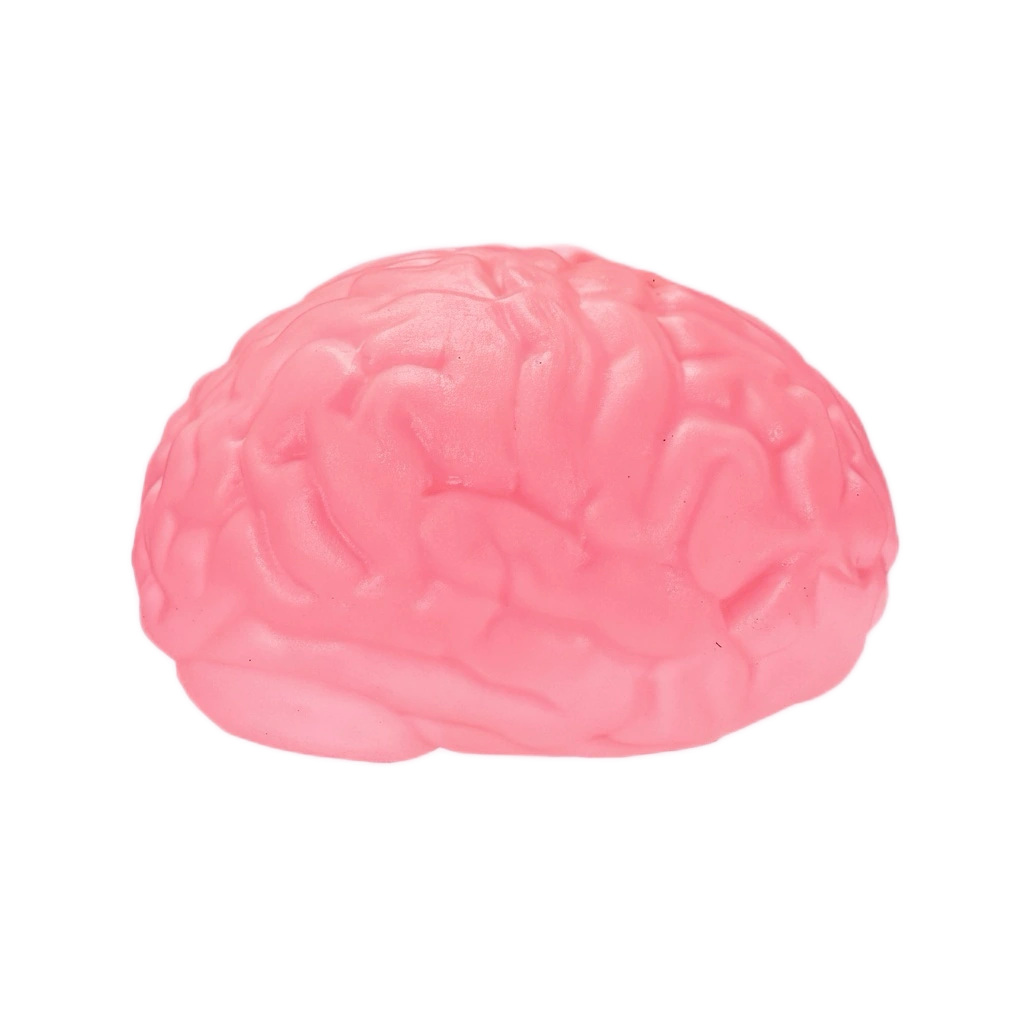
How far a stretchy fidget toy stretches is set by what its body is made of. A rubbery skin (TPR, jelly or soft silicone) can pull out a long way and come back. Foam is different: it bends and gives, but it stretches only a little before it starts to tear. No toy listing we know of, ours included, gives a measured stretch, so the material is the best clue you have.
How far can a stretchy fidget toy stretch?
Toy makers do not publish a number, but the companies that make soft rubbers do. Smooth-On, which sells the Ecoflex line of soft silicones, rates Ecoflex 00-30 at an elongation at break of 900% (Smooth-On). Elongation at break is how much longer a sample gets before it snaps, so 900% means a strip can be pulled out to about ten times its original length in a lab test.
That figure is a ceiling for one lab-tested rubber, not a promise about any toy. A molded fidget toy has thick and thin spots, seams, faces and ears, and it fails at its weakest point long before a clean test strip would. Still, it explains why a rubbery stretch toy can be pulled across a table while a foam one cannot.
For foam, the Polyurethane Foam Association lists elongation as one of the standard strength tests for flexible foam: “a measure of how much the foam stretches before it comes apart” (PFA). It is on the test list because foam does come apart when it is pulled.
Three different toys answer to “stretchy fidget toy”
The search term covers toys that are built in completely different ways. More than 30 listings in our shop have “stretch” or “stretchy” in the name, and they fall into three groups.
| What it is | What you do with it | Examples on our shelf |
|---|---|---|
| Rubbery pull toys | pull long, knot, let snap back | Stretchy Frog 5-Pack, Stretchy Poop 2-Pack |
| Filled stretch squishies | pull slowly, watch the filling drag back | Large S’more Sandwich Squishy, Caramel Monkey Squishy |
| Foam that bends | press, twist a little, let it fill back out | Stretchy Peach Squishy |
Stretchy string toys, the long rubbery noodles you wrap around your fingers, are a fourth kind that we do not carry. The nearest thing on our shelf is the tangle, which twists rather than stretches, plus one stretchy puppy tangle whose ribbed body stretches. Both sit in our tangle fidget toys collection.
Why foam gives out first
A foam squishy is a sponge of tiny cells. Squeezing it pushes the cells flat, which foam handles well. Pulling it asks the thin cell walls to lengthen, which they do only so far.
Our own foam listings say as much when they are honest about it. The Pink Gummy Bear Squishy says its foam “is dense enough to stretch a little without tearing”. A little is the right expectation. The stretchy peach says its foam “pulls soft under your fingers”, which describes a give, not a long pull.
There is one foam toy on our shelf that claims more: the Stretchy Brain Squishy lists its material as “elastic foam” that “pulls long and snaps quickly back”. That is the listing’s description, and it names no grade. If you want to pull hard and often, a toy that says TPR, jelly or rubbery is the safer bet than one that says foam.
What is inside changes how the pull feels
Two toys can have the same kind of skin and still feel nothing alike when you stretch them, because of what the skin holds.
- Nothing much inside. Jelly pull toys like the frogs “pull long and gooey, then ping right back”. The skin does all the work, so the return is quick.
- A slow filling inside. The s’more sandwich “drapes long and slow, then gathers back into a fat little stack”, and its listing credits “the slow rising squishy filling”. The filling resists the pull and slows the return.
- Sand inside. The sand-filled monkeys are heavy and droop when you stretch an arm out; the caramel monkey’s arm “droops, then slowly rises back”. We wrote up why sand behaves that way in sand-filled stress balls.
Size does not decide the stretch
Small does not mean short. The Mini Monkey Squishy is “small enough to hide in a fist” but, in its listing’s words, “stretches farther than its size suggests”. The stretchy poop “pulls way farther than it looks”. The biggest stretch toy with a size given is the Jumbo Monkey Squishy, about 8 inches of sand-filled gorilla. None of them says how far it goes.
What actually ends a stretch
A rubbery skin rated for a long stretch can still split from a small cut. Makers test rubber separately for tear strength, the force needed to keep a tear going once it has started; Smooth-On lists it for Ecoflex 00-30 next to the elongation figure. A nick from a fingernail, a key or a zip gives a tear its starting point, and a long pull then does the rest.
So the practical rules are short:
- Check for nicks before a big pull, and stop pulling a toy that has one.
- Pull with flat fingers, not nails, and not over a sharp table edge.
- Keep rubbery toys out of hot cars and off radiators. We compared how heat and long storage affect TPR and silicone in silicone vs TPR fidget toys.
- Once a skin has split, stretching will widen it. Whether it can be patched depends on the material; see which glue fixes a ripped squishy.
FAQ
What is the stretchy fidget toy called?
It depends on the toy. Long rubbery noodles are usually sold as stretchy strings, twisting link toys as tangles, and animal or food shapes you pull as stretchy squishies. They share the search term, not the build.
How far can you stretch a stretchy fidget toy before it breaks?
No toy listing we know of gives a number. One soft silicone, Ecoflex 00-30, is lab-rated at 900% elongation, about ten times its length, while our foam listings promise only a little stretch. A nick or a thin spot will fail long before either figure.
Is a stretchy squishy toy the same as a stretch fidget toy?
A stretchy squishy toy is one kind of stretch fidget toy: a squishy shape with a stretchy skin, sometimes with a slow filling or sand inside. Stretchy strings and tangles are stretch fidget toys too, but they are not squishies.