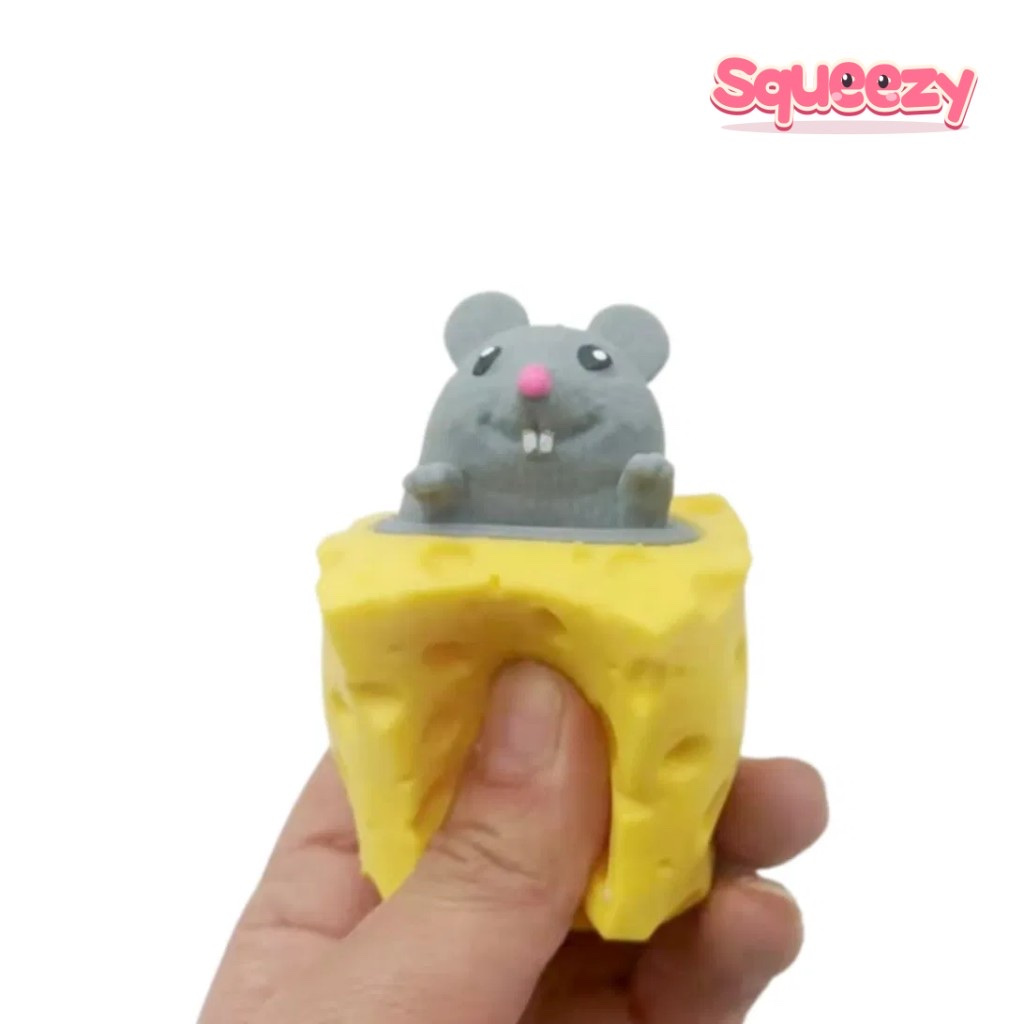
 Cheese Squishy
 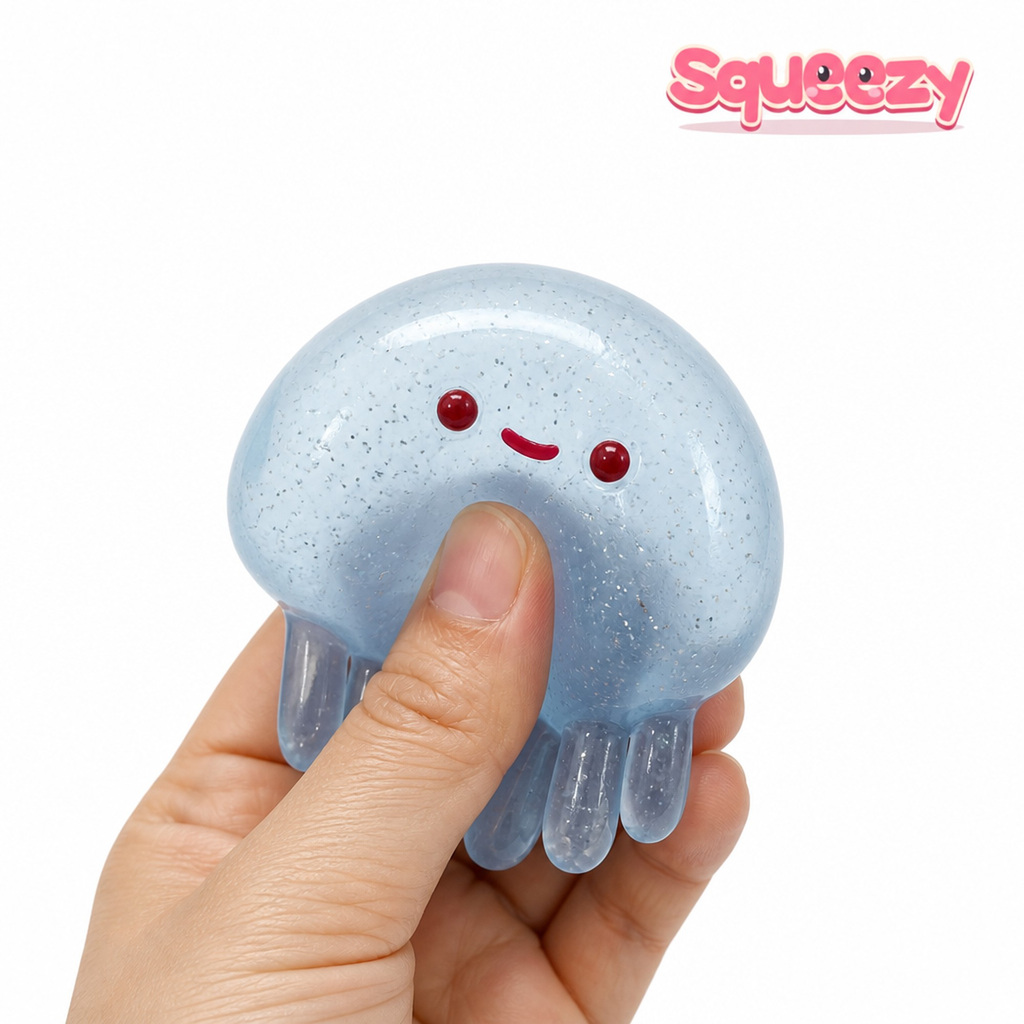 Jellyfish Squishy
 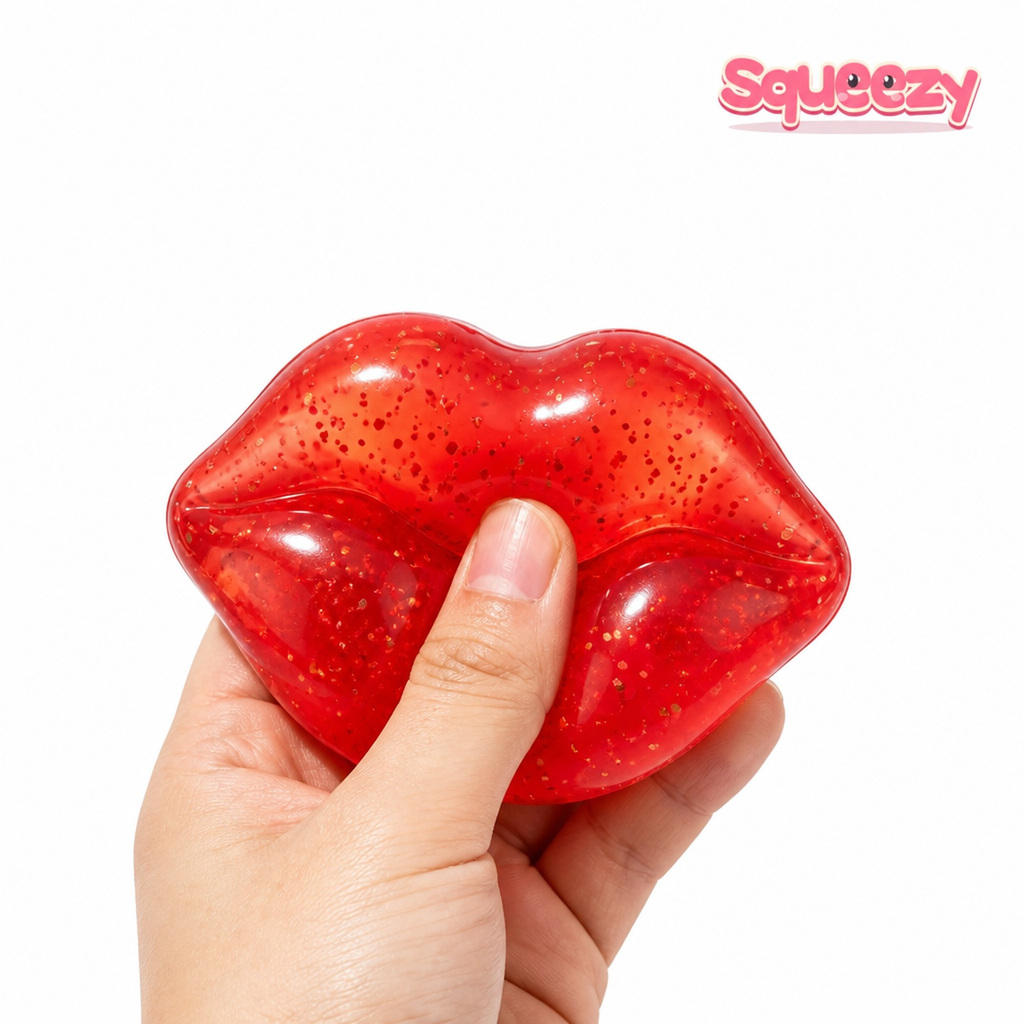 Jumbo Lips Squishy
 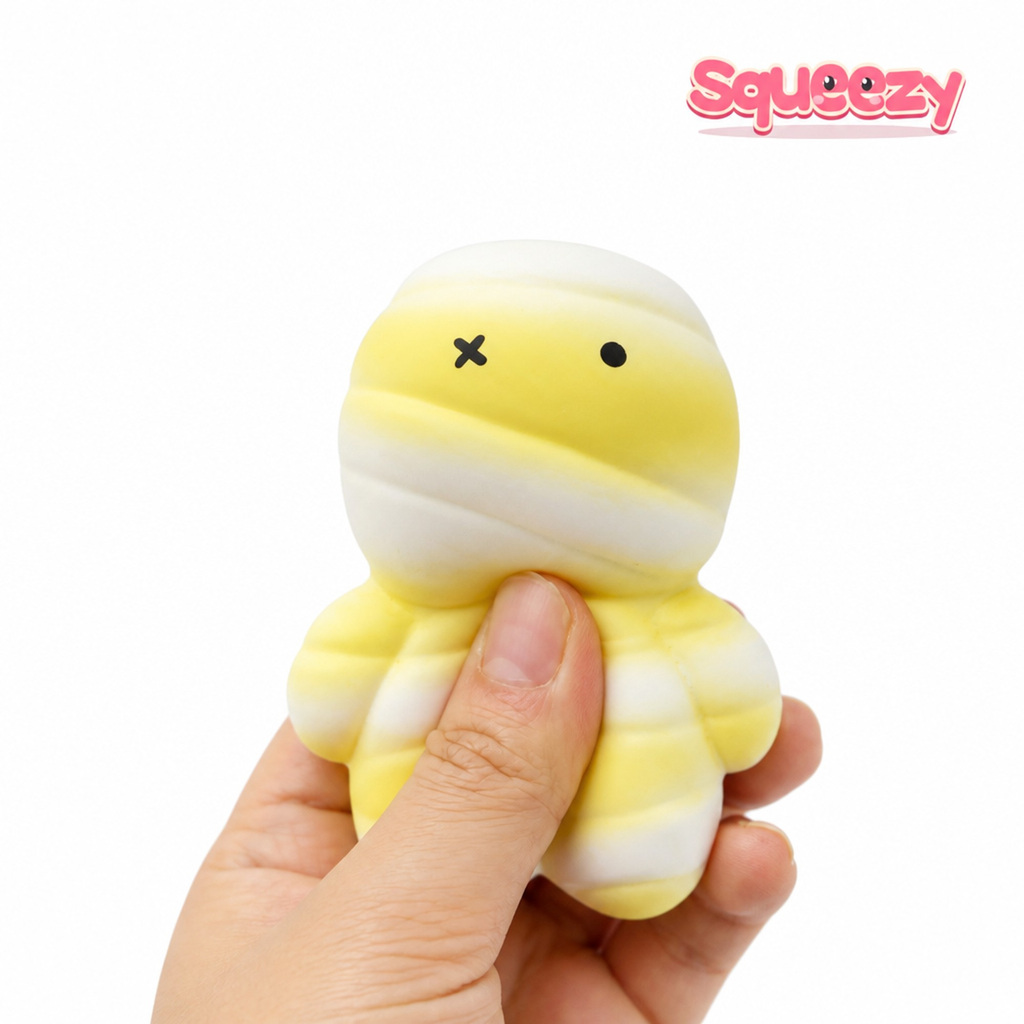 Mummy Squishy
 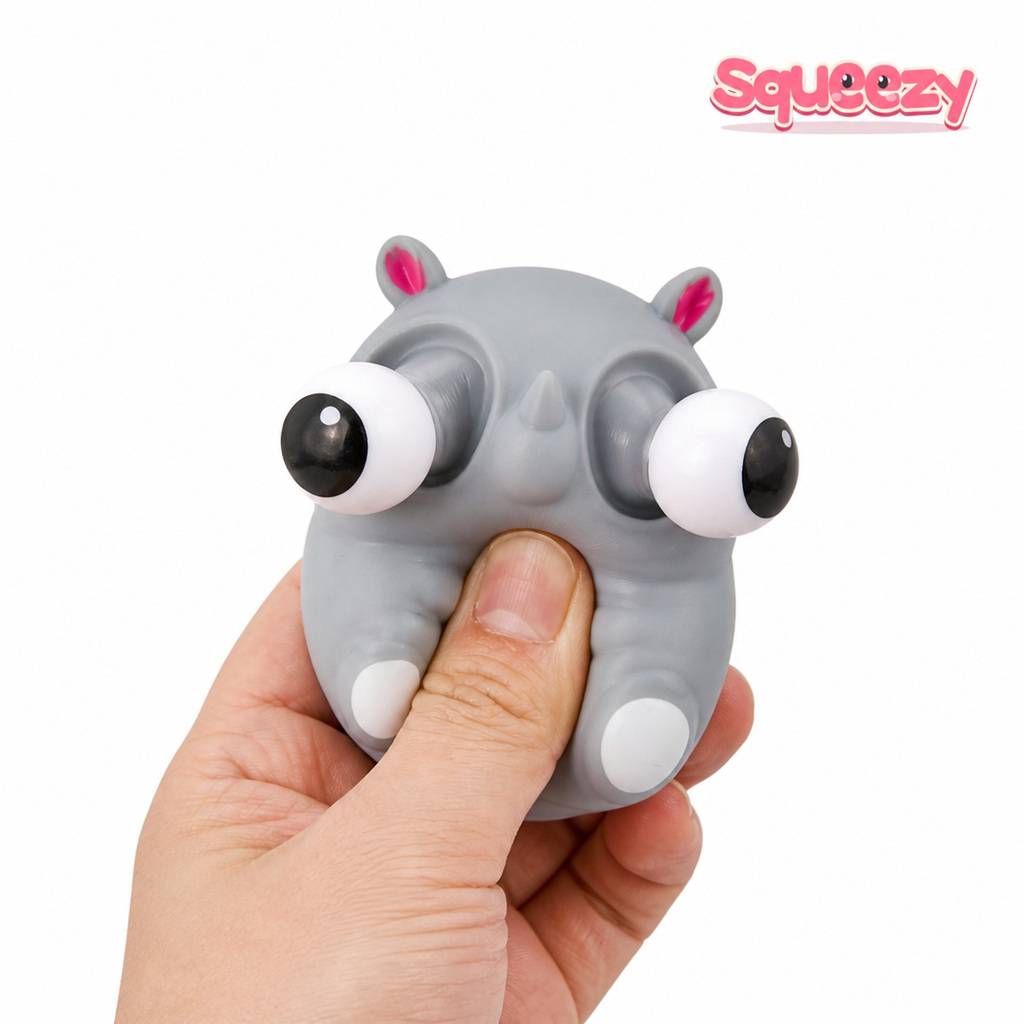 Pop-Eye Rhino
 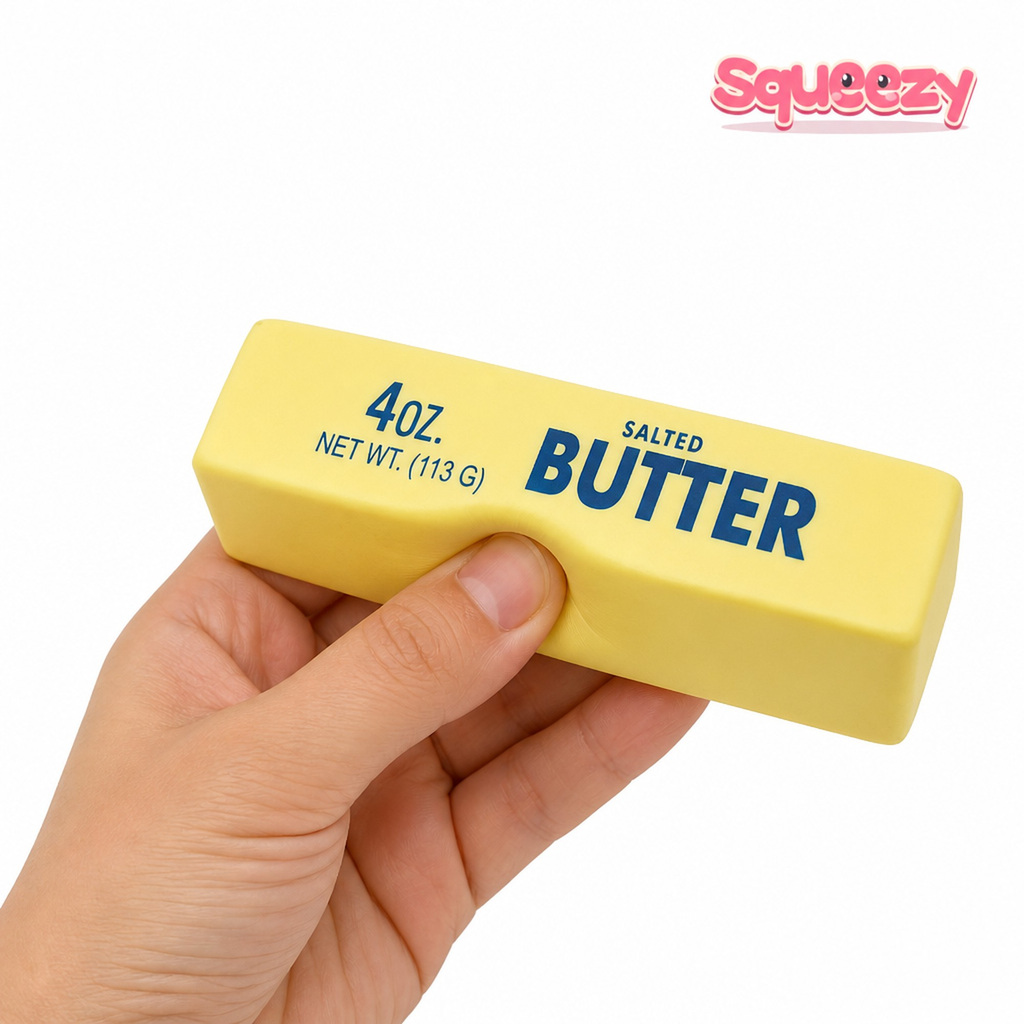 Salted Butter Stick
 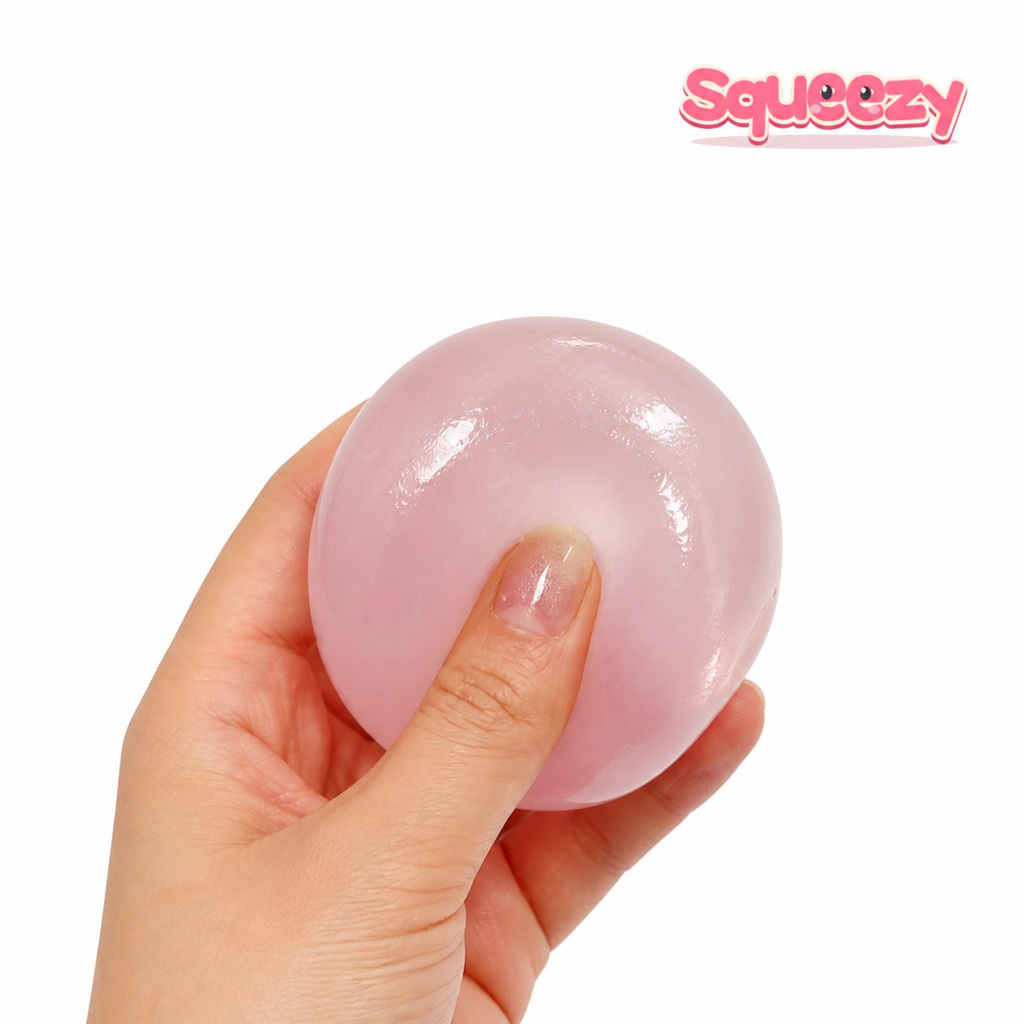 Pink Lychee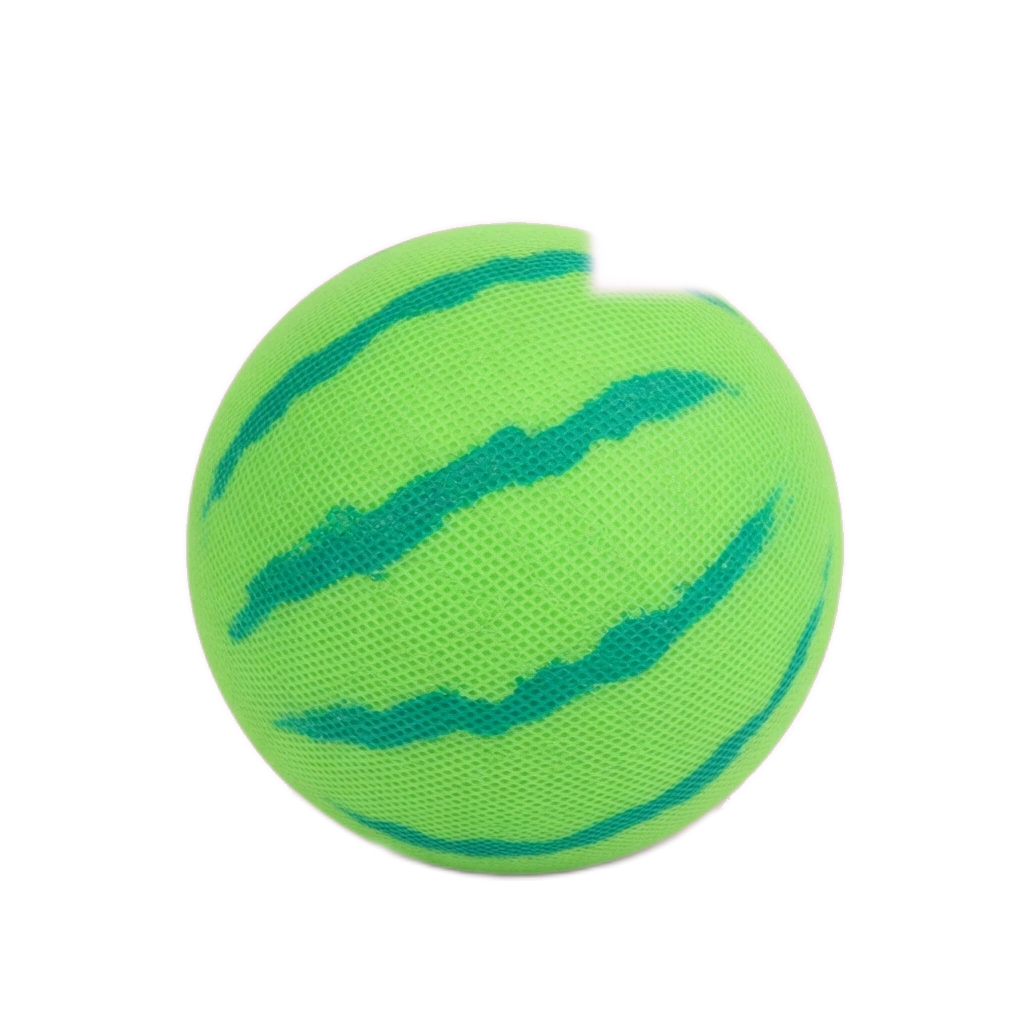
The ball can’t shrink, so it goes out through the holes
A mesh squishy ball bubbles because the soft ball inside the net has nowhere to hide its volume. Squeeze it and the material changes shape but barely compresses, so it pushes out through the only openings it has: the holes in the net. Each hole lets a small dome through, and those domes are the bubbles you see on a stress ball with mesh.
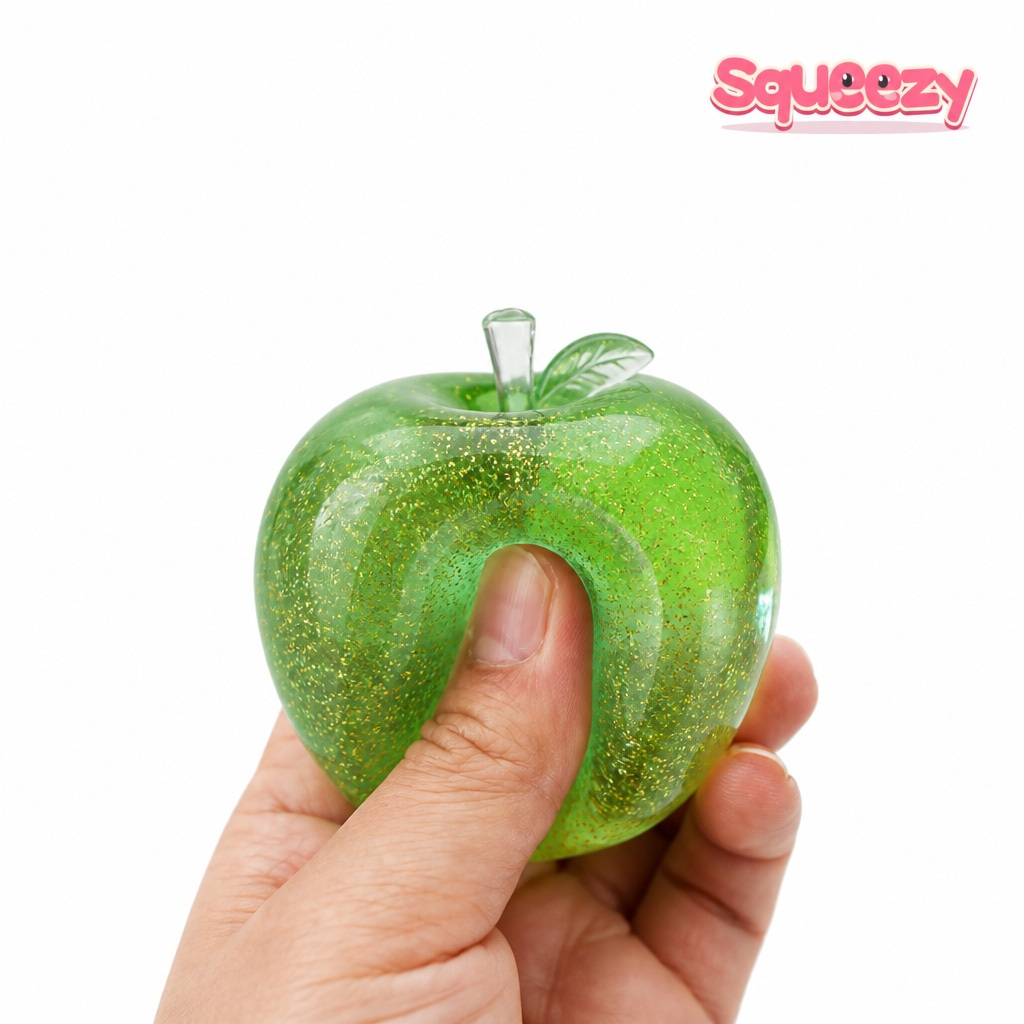
The property behind this has a name, Poisson’s ratio. For soft rubbery materials it sits close to 0.5, the value for a material that keeps its volume while it deforms; as the Wikipedia entry puts it, for these materials it is easier to change shape than to compress. Open-cell foam is the opposite case, with a ratio near zero, because its cells collapse when pressed.
That one difference explains why the same squeeze gives two different results:
- A plain foam stress ball gets smaller in your fist. The air leaves the cells and the ball flattens.
- A gel or rubbery ball in a net keeps nearly the same volume. Whatever you push in on one side has to come out somewhere else, and the net decides where.
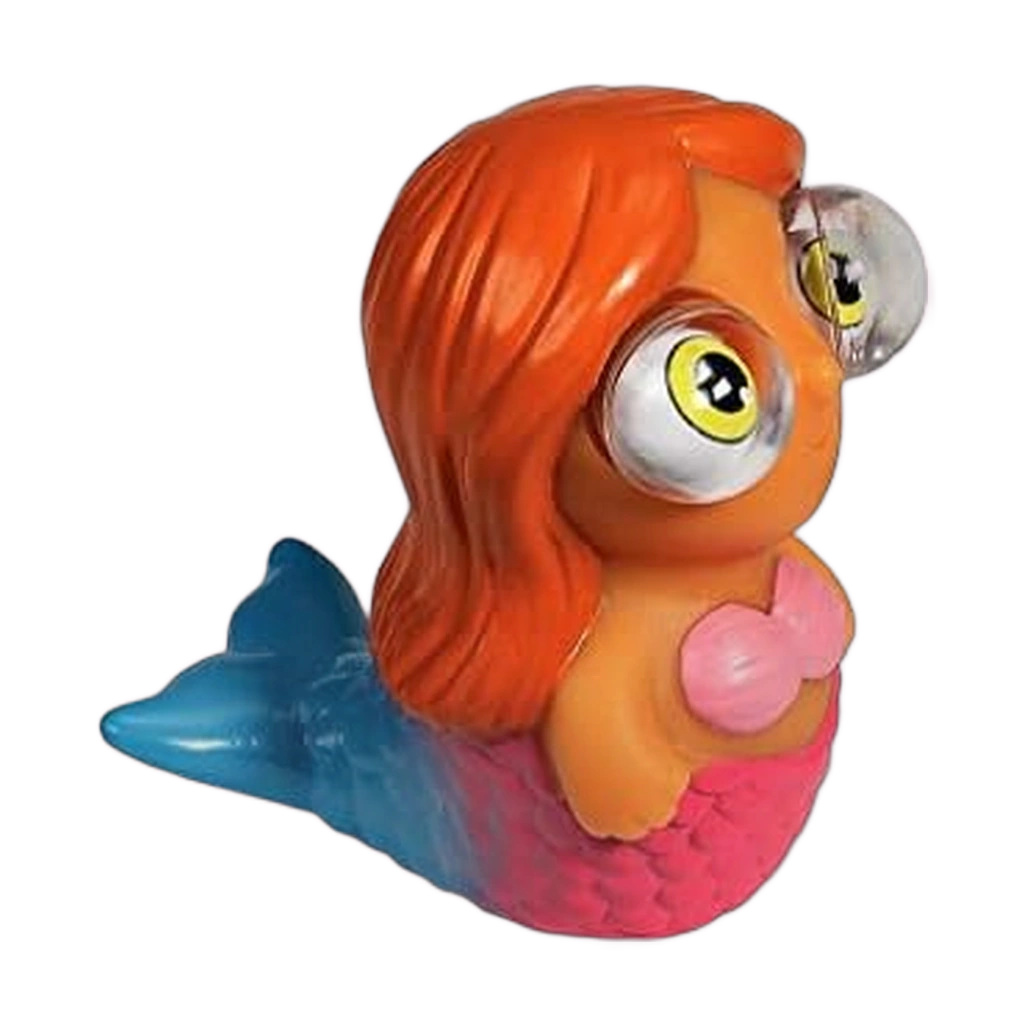
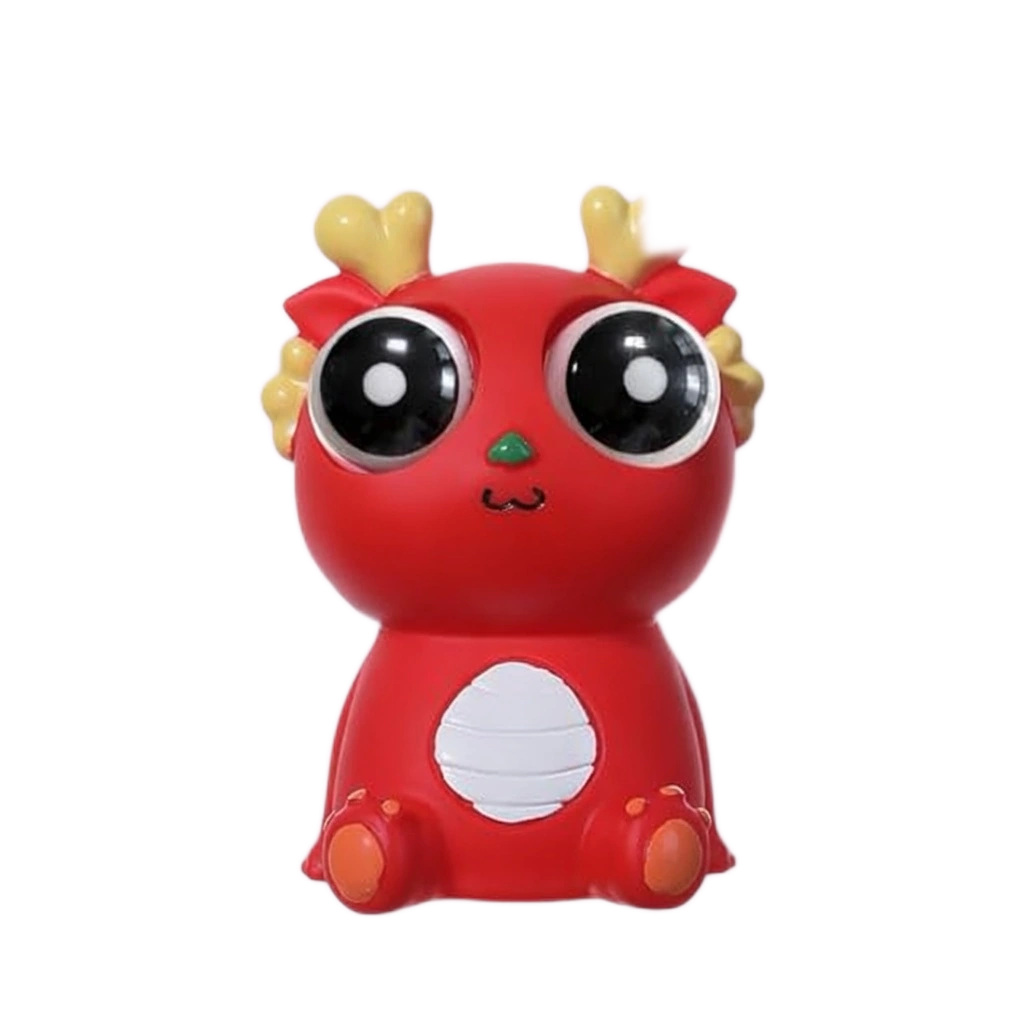
Pop-out eye toys look similar but work on a different rule. They trap air, which does compress, and the pressure pushes the thinnest part outward. We explain that mechanism in squeeze toys where the eyes pop out. A squishy ball in a net needs no trapped air at all.
Why the bubbles come up in a grid
The net sets the pattern. Every strand is a line the ball cannot cross, and every opening is a spot where it can. So the bubbles appear in the same layout as the weave.
| What you see | What is going on |
|---|---|
| Lots of small, even bumps | A fine net: many small openings share the displaced volume |
| A few big domes | Wider openings, or a hard squeeze pushing more volume out at once |
| Big bubbles between your fingers, none under them | Your fingers hold the net flat against the ball, so the openings they cover are closed and the uncovered ones take the extra volume |
| Bubbles that sink back slowly | A fill that recovers slowly; the net only guides the shape, the ball does the recovering |
This is also why the same ball feels different in different grips. Squeeze with the whole palm and the volume spreads over many openings, so you get a field of small bubbles. Squeeze between two fingertips and most of the net is left uncovered on the far side, so fewer, taller domes come through there.
Should you take the net off a mesh squishy ball?
This is one of the most common questions people search, and the short answer is no. The net is what makes it a mesh squishy ball. Without it you have an ordinary squeeze ball: it will squash, but the grid of bubbles, which is the whole point, is gone. Our mesh listings describe the net as the ball’s outer skin, not as packaging to remove.
There is a practical reason too. Cutting a net off means working a blade or scissors right against a soft surface, which is the easiest way to nick the ball underneath. Damage caused by cutting is one of the exclusions in our returns policy, so a ball that splits after its net was cut off is not covered. A net or ball that arrives already split is a different matter: that counts as arriving damaged, and you have 30 days from delivery to contact us about it.
Why the net can eventually cut into the ball
A mesh squishy ball usually fails at one spot rather than wearing out evenly, and the construction explains why. Each squeeze pulls the ball’s surface tight over every strand. A strand is thin, so the same force that spreads comfortably across your palm is concentrated along a narrow line on the ball. Squeeze thousands of times and a soft surface can start to mark along one strand. Once a small cut opens, every bubble next to it stretches that cut a little further.
We have not run a wear test, and none of our listings gives a lifespan in squeezes or months, so treat this as how the build behaves in principle rather than a promise about any one ball.
How to make a mesh squishy ball last longer
The same logic points to what helps:
- Squeeze with your palm, not your nails. A fingernail presses a strand into the surface like a knife edge.
- Don’t twist or wring it. Twisting drags strands sideways across the ball instead of pressing them straight in.
- Keep it away from heat and anything sharp. Heat damage and cuts are both outside what our returns policy covers, and both make the surface easier to split.
- Give slow fills time to recover. If the bubbles sink back slowly, squeezing again before they settle keeps the surface stretched over the strands for longer.
- Check the net when it arrives. A loose or split seam is easier to raise on day one; our box-arrival checklist covers what else to look at.
For cleaning, go gently and skip harsh products; our guide on how to clean a squishy without wrecking it applies here too.
What’s inside our mesh squishy balls
People also ask what is inside a mesh squishy ball, and the honest answer is that it depends on the ball, so read the listing. Here is what ours say:
| Listing | What the listing says is inside | How it comes back | Price |
|---|---|---|---|
| Ocean Octopus Mesh Squishy Stress Ball 12-Pack | A clear body packed with soft beads, under a stretchy mesh skin | Springs right back; the listing says it is not slow-rising | $29.99 for 12, about $2.50 a ball |
| Watermelon Mesh Squishy Ball | A mesh outer with soft squishy fill; turns from green to pink in a warm grip | Squashes flat, then slowly rounds back out | $17.99 |
Neither listing names the material of the fill, and neither gives a measured size: the octopus is described as pocket-sized and the watermelon as palm-sized. The octopus listing also mentions a crunch as the beads bunch up; where that kind of sound comes from is covered in what makes a crunchy squishy crunch.
Not every mesh toy works this way. The Yellow Mesh Marble Fidget ($17.99, listed at 6 x 2 x 2 in and 25 g) is a woven hourglass sleeve with one marble inside that you move through the tube. Nothing bulges through that mesh; the fun is steering the marble.
FAQ
What is a mesh squishy ball?
It is a soft squeeze ball wrapped in a stretchy net. When you squeeze, the ball keeps nearly the same volume, so the material pushes out through the net’s openings as a grid of bubbles, then pulls back in when you let go.
Are you supposed to take the net off a mesh squishy ball?
No. The net is part of the toy, and removing it leaves a plain squeeze ball. Cutting it off also risks nicking the ball, and damage from cutting is not covered by our returns policy.
What’s inside a squishy ball with a net?
It varies by product, so check the listing. Ours describe soft beads in a clear body (the octopus 12-pack) and a soft squishy fill (the watermelon ball); neither names the fill material.
Why did my mesh stress ball split?
Usually along a strand. Each squeeze presses the thin strands into the ball’s surface, so wear tends to start at one line and then spread as bubbles stretch the cut. Nails, twisting, heat and sharp objects make it more likely.